Category: Buying Guides

  • Custom Tent Order Mistakes: What Goes Wrong on a First Order and How to Avoid It

    Custom Tent Order Mistakes: What Goes Wrong on a First Order and How to Avoid It

    Published November 27, 2026. Last updated November 27, 2026.

    The biggest custom tent mistakes are choosing a structure before checking the space, placing the logo where nobody can see it, forgetting weights and sidewalls, and ordering too close to the event. Get Custom Tents catches most of these on the free mockup within 24 hours, and this guide shows you how to avoid the rest before you approve.
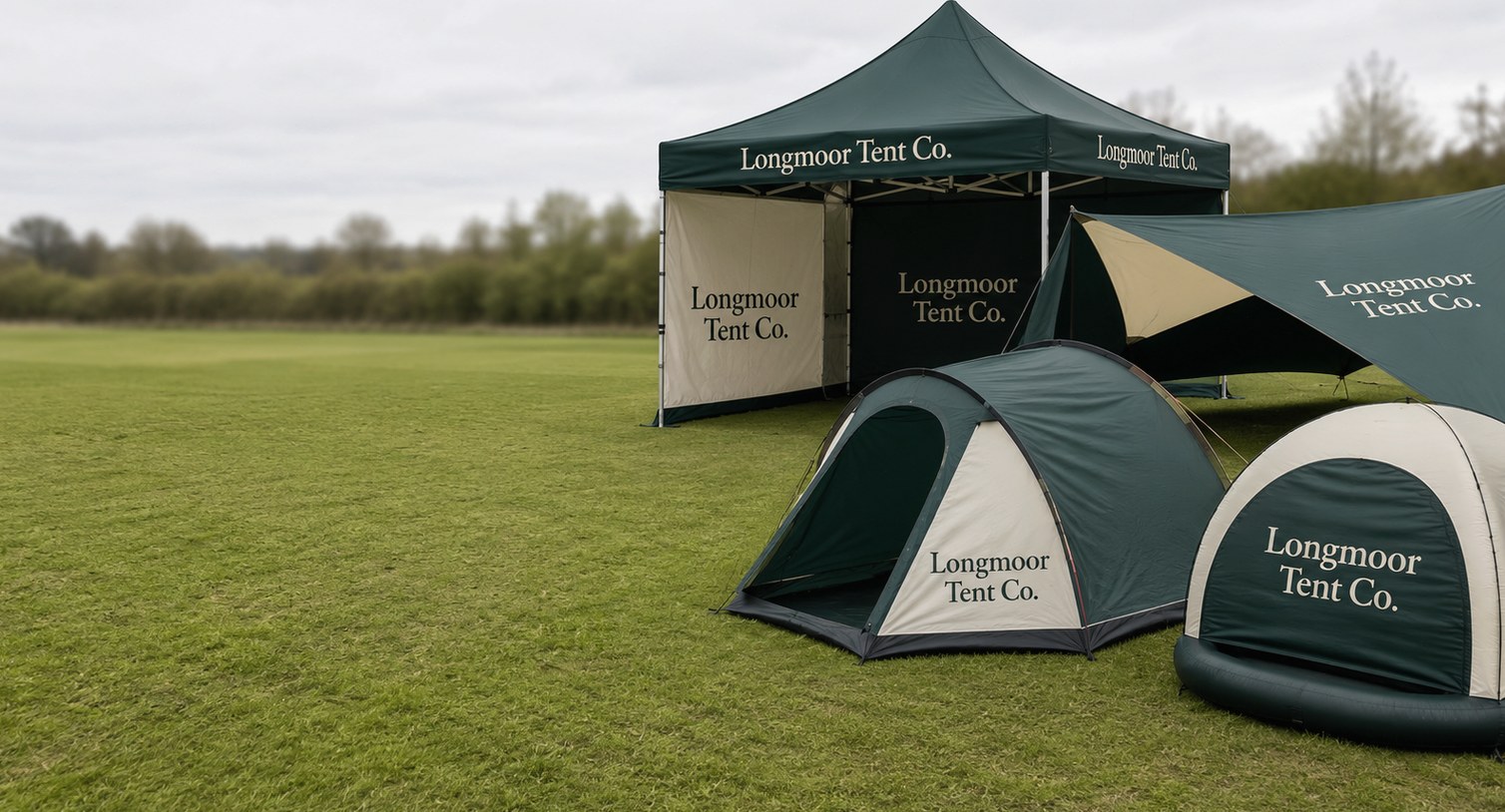
    Custom Tent Order Mistakes: What Goes Wrong on a First Order and How to Avoid It - custom printed tents from Get Custom Tents
    Custom tents with a logo, produced by Get Custom Tents.
    Key facts
    • Canopy tents from Get Custom Tents can be ordered from a single tent
    • Free mockup within 24 hours, with unlimited free revisions
    • Tents are made overseas, so the in-hands date is confirmed with your quote
    • Weights or stakes are needed at almost every outdoor event
    • You pay nothing until you approve the design

    What is the most common mistake on a first custom tent order?

    The most common mistake on a first custom tent order is picking a tent before checking the space it has to fit. Booth footprints at farmers markets, trade shows and street fairs are set by the organizer, and a tent that is too large, too tall or the wrong shape can be turned away at load-in. Get the vendor rules first, then choose the tent.

    Before you request a quote, collect these details from the event or venue:

    • The booth footprint and any height limits, especially indoors or under trees.
    • The ground surface, such as grass, gravel, asphalt or a concrete hall floor.
    • Anchoring rules, since many venues require weights and ban stakes.
    • Neighbor spacing, which decides whether a side of the tent will even be visible.

    With that information, Get Custom Tents can recommend the right structure, whether that is a pop-up canopy tent for a market stall, a frame marquee for a larger hospitality area or a stretch tent for a festival lounge. Choosing the structure to fit the space is far cheaper than discovering a mismatch on event day.

    Why does my logo look smaller or hidden on the finished tent?

    A logo looks smaller or hidden on a finished tent when it is placed on a part of the canopy that people do not actually see from where they stand. On a pop-up canopy, the front valance is usually the most visible spot at eye level, while the roof peak is seen mostly from a distance or from above. Designing for a flat screen instead of a three-dimensional tent is the root of this mistake.

    Common placement errors include:

    • Small text on the roof, where the slope and the distance make it unreadable.
    • Key details near seams and corners, which fold away or get cut by the frame.
    • Only the front printed when foot traffic actually approaches from the side.
    • Too many messages, such as a logo, slogan, web address and phone number all at the same size.

    Get Custom Tents shows your artwork at true scale on the free mockup within 24 hours. The standard canopy order prints the front in full color, and extra sides can be requested with your quote. If you need edge-to-edge graphics on every panel, the full-color printed custom tents page explains the options. Look at the mockup from the viewpoint of a visitor walking past, not as a flat file.
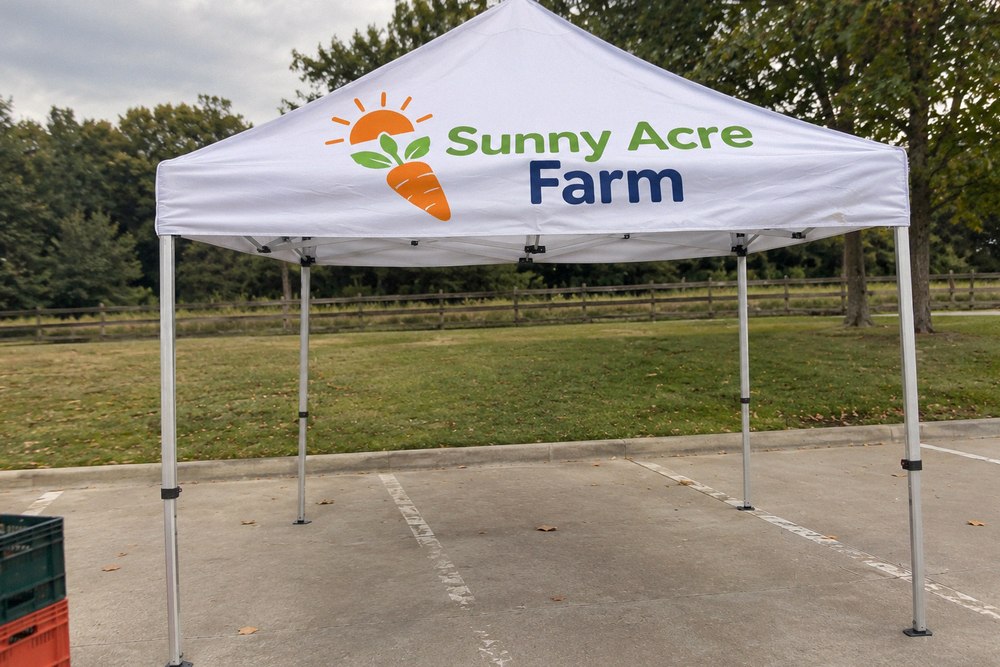
    Custom tents with a logo from Get Custom Tents
    Custom tents from Get Custom Tents.

    What happens if I forget weights, stakes or sidewalls?

    Forgetting weights, stakes or sidewalls is one of the most expensive tent mistakes, because a tent that cannot be secured may not be allowed to stay up. Many outdoor events require every canopy leg to be weighted, and a gust of wind can lift an unanchored pop-up tent off the ground. Order anchoring with the tent, not as an afterthought.

    Sidewalls are the other forgotten accessory. A back wall hides storage boxes and gives a cleaner backdrop for photos, side walls block low sun and wind, and a full set turns an open canopy into a private space for a sponsor lounge or first-aid station. Printed walls also add branding at eye level, which is often where people actually look.

    AccessoryWhy buyers skip itWhat goes wrong without it
    Leg weightsAssumed the venue provides themTent not allowed or unsafe in wind
    StakesEvent moved to grass at the last minuteNo way to anchor on soft ground
    Back wallSeen as optionalClutter visible behind the booth
    Side wallsWeather looked fineLow sun or rain ends the day early

    See sidewalls, flooring and weights and anchoring and wind ratings before you finalize the order.

    How late is too late to order a custom tent?

    Ordering too late is a mistake because custom tents are made overseas, so production and freight both need time before the in-hands date. Get Custom Tents confirms the freight method and your delivery date with the quote, so the safest move is to request that quote as soon as the event is on the calendar, even if the design is not final.

    Late orders usually happen for predictable reasons:

    1. Waiting for final artwork. Send a draft logo to start the mockup and swap in the final file later.
    2. Slow internal approvals. Name one approver who can sign off on the mockup quickly.
    3. Underestimating rush limits. Rush service shortens production, but freight still has to happen.
    4. Forgetting setup practice. Leave a few days after delivery to test the tent before the event.

    The backward timeline guide walks through planning from your event date. If you are in a hurry, put the event date at the top of your quote request so the schedule is checked before anything else.

    What artwork mistakes slow down a custom tent proof?

    Artwork mistakes slow down a custom tent proof when the file is too small, the colors are vague or the wording is still changing. A logo that looks sharp on a website can blur badly when stretched across a canopy valance, so send the highest-quality version you have, ideally a vector file. Get Custom Tents can work from almost any file, but a clean file means a faster, more accurate mockup.

    Watch for these issues before you send artwork:

    • Low-resolution images pulled from social media or a website header.
    • Color names instead of references, such as asking for “our blue” without a brand color code.
    • Text still in review, which forces a second round of mockups and delays approval.
    • Fine print, such as long web addresses or disclaimers, that nobody can read from a walkway.

    Full-color digital printing has no limit on the number of colors, so gradients and photos are fine, but contrast still matters. A dark logo on a dark canopy disappears in shade. The artwork guide covers files, print areas and proof checks in detail.

    Should I order one tent or several for my first order?

    Order the number of tents your real event plan needs, not a guess. Canopy tents from Get Custom Tents can be ordered from a single tent, which makes a first booth tent a normal order. The mistake is ordering one tent when the plan actually includes a second event on the same weekend, a staff area or a sponsor zone that also needs shade.

    Think through every place a branded tent will appear over the next season. A youth league may need a tent for each field, a brewery may want one for the taproom patio and one for festivals, and a nonprofit may need registration, water and finish-line tents for a charity walk. Ordering together keeps colors consistent and can lower the cost per tent.

    If you are not sure, the quantity planning guide helps you count, and the stretch tent vs pop-up canopy comparison helps if a single larger structure might replace several small ones.

    How can I avoid surprises when the tent arrives?

    Avoid surprises on delivery by approving a mockup that shows every printed panel, confirming the frame and canopy color in writing, and test-assembling the tent before event day. Get Custom Tents confirms the fabric, frame and color with your quote, and nothing is printed until you approve the design, so the details are fixed before production starts.

    When the tent arrives, open it and set it up at least once. Check that every panel matches the approved mockup, that the frame locks properly and that the carry bag, weights and stakes are all present. A practice setup also shows your team how long assembly takes, which matters when load-in windows are short.

    Finally, protect your investment after the first event. Packing a damp canopy is the classic way a new tent gets mildew spots. The cleaning and storage guide covers drying and storing, and the how it works page explains each step from quote to delivery. When you are ready, start with the quote form.

    Frequently asked questions

    What should I check on a custom tent mockup before approving it?

    A custom tent mockup should be checked for spelling, logo size, color, placement on each panel and how the design reads from a walkway. Get Custom Tents sends the mockup within 24 hours with unlimited free revisions, so ask for changes until it is right. Confirm the canopy and frame color too, because nothing is printed until you approve.

    Can a venue refuse my custom tent on event day?

    A custom tent can be refused by a venue if it breaks the event rules on size, height or anchoring. Most organizers publish booth rules for vendors and exhibitors, so read them before ordering. Share those rules with Get Custom Tents in your quote request, and the team can recommend a structure and accessories that fit.

    Is it a mistake to print only the front of a canopy tent?

    Printing only the front of a canopy tent is fine when visitors approach from one direction, such as a row of market stalls. When the tent sits on a corner or in an open field, extra printed sides or walls help people spot it. Get Custom Tents prints the front as standard, and more sides can be requested with your quote.

    Why does a dark logo disappear on a dark custom tent?

    A dark logo disappears on a dark custom tent because there is not enough contrast, and shade under the canopy makes the problem worse. Use a white or light version of the logo, or choose a lighter canopy color. Get Custom Tents shows the actual colors on the free mockup, so you can compare versions before you approve the design.

    Do I need to send a final logo to start a custom tent order?

    A custom tent order can start with a draft logo, because Get Custom Tents uses it to build the first mockup within 24 hours. Swap in the final file before you approve, and the design updates with unlimited free revisions. Starting early protects your in-hands date, since overseas production and freight both need time.

    What is the risk of having several people approve a custom tent design?

    Having several people approve a custom tent design often leads to conflicting edits and slow sign-off, which can push back the in-hands date. Collect feedback internally first, then let one person send a single set of changes. Get Custom Tents can turn each revision around quickly, but only after it receives a clear decision.

    Should I test-assemble a custom tent before the event?

    A custom tent should be test-assembled before the event so your team learns the setup and you can confirm every panel matches the approved mockup. A practice run also reveals missing weights, stakes or bags while there is still time to fix the issue. Get Custom Tents recommends allowing a few days between delivery and event day.

    Can I add sidewalls after my custom tent order has shipped?

    Sidewalls can usually be added to a custom tent later, but ordering them with the tent keeps the colors and print consistent and avoids a second freight wait. Get Custom Tents offers sidewalls, flooring and weights alongside its tents. If you think you might need walls for weather or privacy, include them in the original quote request.

    What mistakes do first-time farmers market vendors make with custom tents?

    First-time farmers market vendors often order a custom tent without checking the market's booth rules, skip leg weights and print a busy design that is hard to read across the lot. A bold name, a simple message and proper anchoring solve most of this. Get Custom Tents can order a single canopy tent for a first stall.

    How do I avoid choosing the wrong type of custom tent?

    Avoid choosing the wrong type of custom tent by starting with the space, the ground, the crowd size and how often you will set it up. Pop-up canopies suit quick booths, frame marquees suit larger hospitality areas and stretch tents suit festival lounges. Get Custom Tents can recommend a structure once you share those details in your quote request.

    Is it a mistake to choose a custom tent on price alone?

    Choosing a custom tent on price alone can backfire if the frame, fabric or accessories do not suit your events, because a tent that fails early costs more over time. Compare the structure, print coverage, anchoring and expected use. Get Custom Tents explains what drives the quote, and you pay nothing until you approve the design.

    Get a free mockup for your tents

    Send your logo or idea and the quantity you have in mind. Get Custom Tents returns a free mockup within 24 hours, you approve the design before anything is produced, and standard turnaround is about two weeks with faster options available. Get a custom quote.
  • Custom Tents for Breweries and Wineries: A Festival and Taproom Playbook

    Custom Tents for Breweries and Wineries: A Festival and Taproom Playbook

    Published November 17, 2026. Last updated November 17, 2026.

    Breweries and wineries get the most from custom tents by pairing a branded pop-up canopy for festivals and tastings with a larger frame marquee or stretch tent for events on their own property. Get Custom Tents prints both styles with your label colors and logo, returns a free mockup within 24 hours and ships in about 2 weeks.

    Custom Tents for Breweries and Wineries: A Festival and Taproom Playbook - custom printed tents from Get Custom Tents
    Custom tents with a logo, produced by Get Custom Tents.
    Key facts
    • Festival booths usually use a pop-up canopy with a printed valance and back wall
    • On-site releases and dinners suit frame marquees or stretch tents
    • Keep prices and seasonal tap lists off permanent panels
    • Free mockup within 24 hours, about 2 weeks standard turnaround, pay nothing until you approve

    Which custom tents does a brewery or winery actually need?

    Most breweries and wineries need two kinds of custom tents: a portable branded canopy for beer festivals, wine walks and farmers markets, and a larger structure for events hosted on their own property, such as release parties, harvest weekends and patio overflow. Get Custom Tents prints both, so one brand look can follow the business from the taproom lawn to the festival field.

    Start by listing every place your brand pours outside the building over a season. A typical list includes regional beer or wine festivals, tasting tours, community fairs, charity events where you donate product, distributor or retailer activations, and on-site events. Each location has a different footprint, crew and surface, which is why the right answer is often a small mix rather than one style.

    • Festival booth: a pop-up canopy with a printed valance and back wall, easy for two people to set up.
    • On-site event space: a printed frame marquee or stretch tent that covers seating or a release-day line.
    • Landmark piece: an inflatable dome or tent that draws people across a crowded festival ground.

    How should a brewery or winery brand a festival pouring tent?

    A festival pouring tent works best when the valance names the brewery or winery in large type, the back wall shows the logo and one short line about what you pour, and the side panels stay simple so the tent reads from across the field. Guests at a beer festival or wine walk scan dozens of booths quickly, so the brand name has to win in a single glance.

    Keep tasting lists, prices and seasonal releases off the printed fabric. Those details change every event, and a chalkboard, menu stand or tap handle display handles them better. The tent should carry the parts of your brand that stay the same for years: the name, the logo, the town or region you come from, and perhaps a short line such as a founding story or style focus.

    • Put the brand name on the front valance, not only the roof, because the valance sits at eye level.
    • Use your label colors so the booth matches the cans, bottles and tap handles guests already know.
    • Add your social handle on a side panel if you want festival photos to tag you.
    • Leave room on a back wall for a removable banner when a distributor or event sponsor needs space.

    The full-color printed custom tents page shows how edge-to-edge printing reproduces label art, illustrated logos and photographic backgrounds across every panel.

    Printed Frame Marquees in Bulk - one of the custom tents styles from Get Custom Tents
    Printed Frame Marquees in Bulk.

    Which tent style suits on-site taproom and vineyard events?

    For events on your own property, a frame marquee or a stretch tent usually serves better than a row of pop-up canopies, because guests stay longer, sit down and need shade or rain cover over a wider area. A frame marquee gives a clean, structured space for tables and a bar, while a stretch tent gives a softer, open look that suits vineyard lawns, orchard edges and beer garden patios.

    Think about what the event looks like from the parking lot and in photos. A winery hosting a harvest dinner wants a structure that feels like part of the property, so a stretch tent with a subtle printed logo often fits. A brewery hosting a can release wants clear branding where the line forms, so a frame marquee with a printed gable or sidewall makes sense. The frame marquee vs. stretch tent guide covers the trade-offs in detail.

    EventCommon tent choiceWhy it fits
    Beer festival or wine walkPop-up canopyQuick setup, readable valance, fits a standard vendor plot
    Can or bottle release dayFrame marqueeCovers the line and a pickup station with clear branding
    Harvest dinner or tasting on the lawnStretch tentOpen, relaxed look over seating and tables
    Large outdoor festival entranceInflatable tentLandmark shape that people walk toward

    How do festival rules and pouring logistics affect the tent order?

    Festival organizers often set rules for vendor booths, such as the footprint you can occupy, whether sidewalls are allowed, how tents must be weighted and where signage can hang. Ask each organizer for its vendor guidelines before ordering custom tents, then share them in your quote request so Get Custom Tents can recommend a canopy size and accessories that pass inspection at every event on your calendar.

    Pouring adds its own needs. Jockey boxes, coolers, kegs and wine buckets sit behind the table, so the back of the tent becomes a work area that guests should not walk into. A printed back wall hides that work area and gives you a branded photo backdrop at the same time. Half sidewalls on the sides can block wind from blowing cups and napkins while keeping the booth open and inviting.

    Weights matter more at drinks events than most vendors expect, because festival grounds are crowded and a lifting canopy near a pouring line is a real hazard. Read the anchoring and wind ratings guide, and add weights from the sidewalls, flooring and weights range to the same order so every canopy arrives ready to secure on grass, gravel or pavement.

    Can one tent design cover several brands, labels or locations?

    Custom tents can carry a single master brand or a family of looks, and both approaches work for breweries and wineries with several labels, taprooms or tasting rooms. The most flexible setup prints the parent brand on the canopy roof and valance, then uses sidewalls or back walls that can be swapped to feature a specific label, a seasonal release or a particular location.

    A winery with a main estate and a separate tasting room in town might order identical canopies with the winery name, then add back walls that name each location. A brewery that runs a sister cider or seltzer line might print a second set of sidewalls for festivals where that line is the focus. Swappable panels let the tent fleet stay consistent while the story on the booth changes from event to event.

    • Keep logo size and placement identical across every canopy so the booth is recognizable everywhere.
    • Label each sidewall bag with the brand or location it carries.
    • Ask for every variation on the same mockup so you can compare the set side by side.

    When should a brewery or winery order tents for festival season?

    A brewery or winery should order custom tents several weeks before its first outdoor event of the season, because the process includes a quote, a free mockup within 24 hours, any revisions and about 2 weeks of standard production and delivery. Ordering early leaves room for festival guidelines that arrive late and for a practice setup before the first pour.

    Most drinks businesses know their busiest outdoor stretch well in advance, from spring festival season through fall harvest events. Working backward from the first confirmed event keeps the order calm instead of rushed. If a festival invitation arrives late, express shipping can shorten the timeline, but it is easier to plan the core tents early and add pieces later.

    1. List confirmed festivals and on-site events for the season.
    2. Collect vendor rules and booth footprints from each organizer.
    3. Request a quote with logos, label colors and the tent styles you are considering.
    4. Review the mockup with whoever owns the brand, such as the founder, head brewer or winemaker.
    5. Approve, then schedule a test setup with the event crew before the first event.

    The backward timeline guide on the Get Custom Tents blog walks through each step against a fixed event date.

    What do breweries and wineries get wrong on a first tent order?

    The most common mistake breweries and wineries make on a first custom tent order is designing the canopy like a can or bottle label, with fine detail and small type that looks beautiful up close but disappears at festival distance. A tent is a sign first. Big, simple shapes, a bold brand name and strong contrast always beat intricate artwork when guests are scanning a crowded field.

    Other mistakes are practical rather than visual. Some teams forget weights and sidewalls, then improvise at the first windy festival. Others print a seasonal beer or vintage on the roof and outgrow the tent within months. A few skip the test setup and discover on event morning that nobody on the crew has opened the frame before.

    • Artwork: enlarge the brand name and simplify the logo for distance; see the custom tents artwork guide.
    • Content: keep changing details off the permanent panels.
    • Accessories: order weights and sidewalls with the tents, not after.
    • Care: dry tents fully after a rainy festival; spilled beer and wine should be rinsed off before packing.

    How do you order brewery or winery tents from Get Custom Tents?

    Ordering custom tents for a brewery or winery from Get Custom Tents starts with the custom quote form. Share your logo, label colors, the events you plan to attend and the tent styles you are considering. The team returns a free mockup within 24 hours, makes unlimited free revisions, and you pay nothing until you approve the design.

    Mention the surfaces you will set up on, such as festival grass, vineyard lawn, gravel lot or patio pavement, and any vendor rules you have received. Those details help the team recommend weights, sidewalls and the right structure for each event. Standard turnaround is about 2 weeks after approval, with faster options available through express shipping. The how it works page explains each step, and the charity walks and fundraisers page is useful if your brand pours at community fundraising events.

    Frequently asked questions

    How big should a brewery logo be on a festival canopy valance?

    A brewery logo on a festival canopy valance should fill most of the valance height so guests can read it from well down the aisle. Small logos with long taglines get lost in a crowded field. Get Custom Tents shows the exact logo size on a free mockup within 24 hours, so you can enlarge or simplify the artwork before approving the canopy design.

    Should a winery print its vineyard address on custom tents?

    A winery can print its town or region on custom tents, but a full street address is usually too small to read and rarely helps guests at a festival. A region name, a short tagline or a website is easier to scan. Many wineries put directions on a printed card at the table and keep the tent focused on the brand name.

    Can custom tents hide kegs and coolers behind a pouring table?

    Custom tents can hide kegs, coolers and jockey boxes when you add a printed back wall and half sidewalls. The back wall blocks the view of the work area and doubles as a branded photo backdrop. Get Custom Tents can quote the canopy and walls together, so the full pouring booth arrives as one matched set ready for the festival.

    Do beer festivals allow sidewalls on vendor tents?

    Beer festivals set their own rules, and some allow full sidewalls while others ask vendors to keep the front and sides open for crowd flow. Ask each organizer for the vendor guidelines before ordering tents. Share those rules in your Get Custom Tents quote request, and the team can suggest a back wall and half sidewall layout that passes at most events.

    Can a cidery or meadery use the same tent ideas as a brewery?

    A cidery or meadery can follow the same tent approach as a brewery: a branded pop-up canopy for festivals, a larger structure for on-site events and a design built around the label colors. The pouring setup and festival rules are similar. Get Custom Tents prints tents for any craft drinks brand and mocks up the design with your own logo.

    Should a brewery choose one tent color or match each beer label?

    A brewery usually gets more recognition from one consistent tent color that matches its core brand than from tents that change with each beer label. Guests learn to find the booth by color. Seasonal or flagship beers can appear on a swappable back wall instead. Get Custom Tents can mock up both options so the brewery can compare them before ordering.

    Can a distributor or retailer co-brand a brewery festival tent?

    A brewery festival tent can carry a distributor or retailer mark, usually on a back wall or side panel rather than the main valance. Keeping the partner logo on a removable panel lets the brewery use the same canopy at events where the partner is not involved. Get Custom Tents shows every co-branded panel on the free mockup for both partners to review.

    Which tent works best for a vineyard harvest dinner?

    A stretch tent or a frame marquee usually works best for a vineyard harvest dinner, because guests sit for a long meal and need cover over tables rather than a small booth. A stretch tent gives a relaxed, open look on a lawn, while a frame marquee gives a structured space. Get Custom Tents can quote either style with subtle printed branding.

    Can a brewery tent be used at both festivals and indoor taproom events?

    A brewery pop-up canopy can work at outdoor festivals and at large indoor venues such as expo halls, as long as the ceiling height and venue rules allow it. Indoors, the tent is weighted rather than staked. Get Custom Tents recommends the right weights and sizes for each setting when you list both uses in your quote request.

    How should a brewery clean spilled beer off a printed canopy?

    A brewery should rinse spilled beer or wine off a printed canopy with clean water and a mild soap as soon as possible after the event, then let the fabric dry completely before packing. Sugary spills attract insects and can leave sticky marks. The Get Custom Tents cleaning and storage guide explains the drying steps that protect printed tent fabric.

    What should a brewery or winery tell the quote team about its events?

    A brewery or winery should tell the quote team which festivals and on-site events it plans to attend, the surfaces it will set up on, any vendor rules received, and whether tents need to travel between locations. Those details help Get Custom Tents recommend styles, sidewalls and weights, and return an accurate quote and free mockup within 24 hours.

    Can a tasting room order a single branded canopy for its patio?

    A tasting room can order custom tents for a patio, and the quote team will confirm the current order minimum for the chosen style when you request a quote. Patio canopies often stay up for long stretches, so weights and shade sidewalls matter. Get Custom Tents mocks up the patio canopy with your logo for free before you commit to anything.

    Get a free mockup for your tents

    Send your logo or idea and the quantity you have in mind. Get Custom Tents returns a free mockup within 24 hours, you approve the design before anything is produced, and standard turnaround is about two weeks with faster options available. Get a custom quote.

  • Inflatable Tents vs Pop-Up Canopy Tents: Which Custom Tents Fit Your Event?

    Inflatable Tents vs Pop-Up Canopy Tents: Which Custom Tents Fit Your Event?

    Published November 10, 2026. Last updated November 10, 2026.

    Choose pop-up canopy tents when you need simple, repeatable setup and readable branding across several booths, and choose inflatable tents when one striking branded landmark matters most. Get Custom Tents prints both styles in bulk with a free mockup, so you can compare custom tents with your own logo before deciding which structure fits your event.

    Inflatable Tents vs Pop-Up Canopy Tents: Which Custom Tents Fit Your Event? - custom printed tents from Get Custom Tents
    Custom tents with a logo, produced by Get Custom Tents.
    Key facts
    • Pop-up canopies stand on a folding metal frame; inflatable tents hold their shape with air beams
    • Pop-up canopies need no power; blower-fed inflatables need power on site
    • Many events combine one inflatable centerpiece with several branded canopies
    • Free mockup within 24 hours and about 2 weeks standard turnaround for either style

    What is the difference between inflatable tents and pop-up canopy tents?

    Inflatable tents and pop-up canopy tents solve the same problem in opposite ways. A pop-up canopy tent stands on a folding metal frame with a printed fabric top stretched over it, while an inflatable tent holds its shape with air-filled beams or tubes and has no metal frame at all. That one structural difference shapes how each tent looks, sets up, packs and performs at an event.

    A pop-up canopy is the familiar square or rectangular booth you see at markets, sidelines and street fairs. The legs extend, the scissor truss opens, and the printed top and valance carry your branding. An inflatable tent arrives as one or more fabric pieces with sealed or blower-fed air chambers. Once inflated, the curved beams form the arches and corners, and the printed fabric covers them edge to edge.

    Get Custom Tents prints both styles in bulk, so the choice is not about which one is available. The choice is about which structure fits your event, your crew and your brand. The rest of this guide walks through those trade-offs one question at a time.

    Which custom tents set up faster with a small event crew?

    Pop-up canopy tents are usually the simpler choice for a small or rotating crew, because the setup motion is the same every time and needs no power. Two people can extend the frame, lock the legs and attach weights without special equipment. Inflatable tents also go up quickly, but they depend on a pump or blower and on someone who knows the inflation and anchoring steps.

    Think about who actually sets the tents up. Volunteers at a youth league, part-time staff at a dealership or brand ambassadors on a tour change from week to week. A pop-up canopy forgives inexperience: if a leg is not locked, it is obvious. An inflatable tent rewards a trained team that sets it up often, and it looks dramatic when the beams fill and the structure rises.

    • Pop-up canopy: no power needed, familiar steps, easy to teach in one session.
    • Inflatable tent: needs an inflation device and, for blower-fed models, a power source on site.
    • Both: need proper anchoring before anyone stands underneath.
    Printed Frame Marquees in Bulk - one of the custom tents styles from Get Custom Tents
    Printed Frame Marquees in Bulk.

    Which style gives your brand more visual impact?

    Inflatable tents usually win on pure visual impact, because the curved beams and seamless panels read as a sculpted brand object rather than a booth. Pop-up canopy tents win on clear, readable messaging, because the flat valance and canopy panels are ideal for a logo, a tagline and a call to action that people can read from a distance.

    An inflatable tent works like a landmark. At a festival, race finish area or product launch, the unusual shape draws people across a field and stands out in photos and social posts. Full-color printing can wrap the beams in brand colors, so the whole structure becomes the logo. See how edge-to-edge printing works on the full-color printed custom tents page.

    A pop-up canopy tent works like a sign with a roof. The valance is the most-read panel on the tent, and it sits right at eye level for people walking by. If your goal is to tell people who you are and what you sell in one glance, a canopy with a strong valance message is hard to beat. Many brands use both: one inflatable as the anchor, with canopies doing the selling around it.

    How do inflatable tents and pop-up canopies compare side by side?

    Inflatable tents and pop-up canopy tents differ most in setup needs, branding style, portability and the kind of event they suit best. The table below sums up the practical trade-offs a buyer weighs before requesting a quote from Get Custom Tents. Neither style is better everywhere; each is stronger in specific situations.

    FactorPop-up canopy tentsInflatable tents
    StructureFolding metal frame with printed topAir-filled beams with printed fabric, no metal frame
    SetupManual, no power neededPump or blower; some models need power on site
    Branding strengthReadable valance and canopy messagingSculpted shape, strong landmark presence
    Best eventsMarkets, sidelines, booths, weekly eventsLaunches, festivals, sponsor zones, finish lines
    Crew fitRotating volunteers and staffTrained teams who set up often
    AccessoriesSidewalls, weights, flooringSidewalls or curtains, anchoring kits, inflation gear

    Which custom tents hold up better outdoors in wind and rain?

    Both inflatable tents and pop-up canopy tents are built for outdoor events, and both depend on correct anchoring far more than on their structure type. A pop-up canopy needs leg weights or stakes at every corner. An inflatable tent needs its anchor points tied down, and a blower-fed model needs its air supply running for the whole event.

    Rain is rarely the problem for either style; wind is. A pop-up canopy catches wind under its roof like a sail, so weights and sidewall choices matter. An inflatable tent flexes rather than bending metal, but it still needs every anchor point secured. Always follow the specific guidance for the tent you order, and take any tent down when conditions turn rough.

    Before you choose, read the anchoring and wind ratings guide and plan which sidewalls, flooring and weights belong in the order. Get Custom Tents can include those accessories in the same quote, so the tents arrive ready to secure on grass, turf or pavement.

    Which is easier to transport and store between events?

    Pop-up canopy tents pack into a long, rigid frame bag plus a soft canopy bag, which makes them easy to stack in a van or storage room. Inflatable tents pack into a soft bundle without a long frame, so they often fit in spaces that a folded canopy frame would not, but they need careful drying and folding to protect the air chambers.

    For a brand that moves tents every weekend, the question is less about weight and more about routine. Frames tolerate being loaded quickly. Inflatable beams prefer to be fully deflated, dried and rolled the same way each time. Neither style likes being packed wet. The tent cleaning and storage guide on the Get Custom Tents blog covers the drying and folding steps that keep printed fabric sharp.

    • Label bags by tent, panel and event so crews pack complete sets.
    • Keep inflation devices, hoses and anchors with the tent they belong to.
    • Store everything dry, shaded and off the floor.

    Which custom tents suit your event type?

    Pop-up canopy tents suit events where you need several identical branded booths, such as farmers markets, sports sidelines, registration tables and dealer events. Inflatable tents suit events where one standout structure matters most, such as a product launch, a sponsor activation, a festival entrance or a race start and finish zone. Many organizers order a mix.

    A practical way to decide is to picture the event photo you want. If it shows a row of matching booths with clear logos, choose canopies. Vendors and clubs often start there; see custom tents for farmers market vendors and custom tents for youth sports leagues for examples. If the photo shows one eye-catching branded structure with people gathered around it, choose an inflatable and browse inflatable air domes and tents.

    For a sponsor village or brand zone, a common layout is one inflatable as the centerpiece with pop-up canopies along the edges for product demos, sign-ups and giveaways. That approach combines landmark visibility with practical, readable selling space.

    How do you order inflatable or pop-up custom tents from Get Custom Tents?

    Ordering either style from Get Custom Tents follows the same simple path: request a quote with your event details, receive a free mockup within 24 hours, revise as many times as you need, and pay nothing until you approve the design. Standard production and delivery take about 2 weeks, with faster turnaround available through express shipping.

    1. Share the event type, surface, number of tents and which styles you are considering on the custom quote form.
    2. Send your logo and any brand colors, taglines or sponsor marks.
    3. Review the free mockup, which shows exactly where branding sits on each panel or beam.
    4. Request unlimited free revisions until the design is right.
    5. Approve the design, then production starts and the tents ship to your address or venue.

    If you are unsure which style fits, say so in the quote request. The team can mock up a canopy and an inflatable with the same artwork so you can compare them before deciding. The how it works page explains each step in more detail.

    Frequently asked questions

    Can the same logo artwork be used on inflatable tents and pop-up canopies?

    Inflatable tents and pop-up canopies can share the same logo files, but the layout changes. A canopy places branding on flat roof and valance panels, while an inflatable wraps artwork around curved beams and panels. Get Custom Tents adapts one set of artwork to both shapes and shows each layout on a free mockup within 24 hours, so you can compare them before approving anything.

    Do inflatable tents need electricity at the event site?

    Inflatable tents need electricity only when the model uses a constant blower to keep air moving through the beams. Sealed-air models are inflated with a pump and then closed, so they can stand without power once set up. When you request a quote from Get Custom Tents, mention whether your venue has power so the team can suggest the right inflatable style.

    Is a pop-up canopy or an inflatable tent better for a race finish line?

    An inflatable tent is often the stronger choice for a race finish line, because its arched shape works as a landmark that runners and spectators spot from far away. Pop-up canopies then handle timing, medals, water and sponsor booths nearby. Get Custom Tents can print both in matching brand colors so the finish area looks like one coordinated setup.

    Can a pop-up canopy and an inflatable tent be ordered together on one quote?

    A pop-up canopy order and an inflatable tent order can share one quote request at Get Custom Tents. List each style, the quantity of each and the events they will serve. The team returns a free mockup for every design within 24 hours, and you pay nothing until you approve, so mixing styles adds no extra steps to the process.

    Which custom tents work better on indoor expo floors?

    Pop-up canopy tents usually fit indoor expo floors more easily, because they need no power, stand on weights instead of stakes and match standard booth footprints. Inflatable tents can work indoors when the venue allows them and has enough ceiling height and power for a blower. Check the exhibitor manual first, then share those rules in your custom tent quote request.

    Are inflatable tents harder for volunteers to set up than canopies?

    Inflatable tents are not necessarily harder to set up, but they involve different steps that volunteers must learn, including connecting the pump or blower, checking valves and securing every anchor point. Pop-up canopies follow a single repeatable motion most people pick up quickly. For rotating volunteer crews, canopies are usually easier; for trained event teams, inflatables are very manageable.

    Can I swap the printed cover on an inflatable tent later?

    Inflatable tent designs vary, and some use removable printed covers while others have branding printed directly on the air structure. If you expect to rebrand, change sponsors or reuse the tent for several campaigns, ask Get Custom Tents about a style with replaceable printed fabric. That choice affects how the tent is quoted and how future artwork updates are produced.

    How do I choose between an inflatable tent and a frame marquee for a launch?

    An inflatable tent suits a launch where visual impact and a striking shape matter most, while a frame marquee suits a launch that needs a larger covered space for guests, seating or displays. Consider the guest count, the surface and how long the event runs. Get Custom Tents can mock up both options with your launch artwork for a direct comparison.

    What details help a supplier recommend inflatable or pop-up custom tents?

    Custom tent suppliers recommend the right style fastest when they know the event type, the ground surface, whether power is available, how often the tents will be used and who will set them up. Add your logo files and any sponsor requirements. With those details, Get Custom Tents can suggest a style and return a free mockup within 24 hours.

    Do pop-up canopy tents look professional enough for a premium brand event?

    Pop-up canopy tents look professional at premium events when the printing is sharp, the colors match the brand and the tent is dressed with printed sidewalls and proper weights. A plain canopy with a small logo can look basic, but full-color panels and a clean valance message change that impression. Get Custom Tents shows the complete look on a free mockup first.

    Can inflatable tents and pop-up canopies share the same sidewall designs?

    Inflatable tents and pop-up canopies rarely share identical sidewalls, because the panels attach differently and follow different shapes. The artwork, colors and messages can stay the same across both styles, though. Get Custom Tents sizes the sidewall artwork to each structure and shows both layouts on the mockup, so your branding looks consistent even when the hardware differs.

    Which custom tent style is a better first purchase for a growing business?

    A pop-up canopy is usually the better first custom tent for a growing business, because it works at markets, sidewalk sales, community events and trade shows without power or special training. An inflatable makes sense later, when the business runs bigger activations that need a standout centerpiece. Get Custom Tents can quote both now so you can plan ahead.

    Get a free mockup for your tents

    Send your logo or idea and the quantity you have in mind. Get Custom Tents returns a free mockup within 24 hours, you approve the design before anything is produced, and standard turnaround is about two weeks with faster options available. Get a custom quote.

  • How to Clean, Dry and Store Custom Tents So They Last for Seasons

    How to Clean, Dry and Store Custom Tents So They Last for Seasons

    Published November 3, 2026. Last updated November 3, 2026.

    Custom tents last for many seasons when you clean printed canopies gently, dry every panel completely before packing, and store frames and fabric apart in a dry place. Get Custom Tents prints branding that is built for outdoor events, and a simple routine after each use keeps colors sharp, frames moving freely and your tents ready for the next booking.

    How to Clean, Dry and Store Custom Tents So They Last for Seasons - custom printed tents from Get Custom Tents
    Custom tents with a logo, produced by Get Custom Tents.
    Key facts
    • Dry every canopy and sidewall fully before packing to prevent mildew and odor
    • Use mild soap, cool water and a soft brush; skip pressure washers and harsh solvents
    • Store canopy tops off the frame, loosely folded, in a dry and shaded room
    • Replacement canopy tops can be reprinted for an existing frame, with a free mockup within 24 hours

    What is the right way to clean custom tents after an event?

    Clean custom tents with cool water, a mild soap and a soft brush or sponge, working on the canopy while it is still on the frame so the fabric stays taut. Rinse thoroughly and let the tent stand open until every panel is dry. That routine removes dust, pollen, food spills and bird droppings without stressing the printed surface.

    Most marks on a branded canopy are surface dirt, and they come off more easily when you deal with them the same day. Dried-on grime and sap bond to the fabric over time, and scrubbing hard later is what wears printed areas. A quick rinse at the venue, or as soon as the tents come back to your shop, saves effort later.

    1. Brush off loose dirt and leaves with a dry, soft brush.
    2. Wet the canopy with a hose on a gentle setting or a bucket and sponge.
    3. Wash with diluted mild soap, using light circular strokes on printed areas.
    4. Rinse until no suds remain, since soap residue attracts new dirt.
    5. Leave the tent standing open in the shade or a breeze until completely dry.

    Which cleaning products and tools should you avoid on printed tent fabric?

    Avoid pressure washers, bleach, solvents, abrasive pads and machine washing on custom tents. Each of those can strip the protective finish from the fabric, weaken seams or dull the printed graphics. A soft brush and mild soap handle almost every routine cleaning job on a branded canopy, sidewall or valance.

    Pressure washers are the most common mistake. The force that makes them effective on concrete can lift fibers, push water through seams and blur fine logo edges. Household cleaners with bleach or degreasers can fade colors and leave residue that later shows up as streaks in photos. Washing machines twist and crease large panels and can tear the hook-and-loop strips that hold sidewalls in place.

    • Skip: pressure washers, bleach, solvents, stiff wire brushes and scouring pads.
    • Skip: tumble dryers and ironing printed panels.
    • Use: cool water, mild soap, soft brushes and microfiber cloths.
    • Test first: try any spot cleaner on a hidden corner before using it on your logo.
    Printed Frame Marquees in Bulk - one of the custom tents styles from Get Custom Tents
    Printed Frame Marquees in Bulk.

    Why does drying matter more than washing for custom tents?

    Drying matters most because custom tents packed while damp can develop mildew, musty odors and stains within days, and mildew marks on printed fabric are hard to remove. Every canopy, sidewall and storage bag should be completely dry before the tent goes into storage, even if that means opening it again back at your base.

    Events often end in the rain or at dusk, when there is no time to dry anything on site. That is fine as long as the tent comes back out the next day. Set the frame up indoors or in a covered area, attach the canopy, and let air move across both sides of the fabric. Check the valance seams and the corners, which hold moisture the longest.

    Frames need the same attention. Wipe water off the legs and joints and let the frame dry open before you collapse it. Moisture trapped in sliding joints and around the leg pins is what causes stiffness and corrosion over a season.

    How should you store custom tents between events?

    Store custom tents in a dry, shaded room with the canopy removed from the frame, folded loosely along its natural lines and packed in a breathable bag. Keep frames upright or flat in their own bag, and never stack heavy weights or boxes on top of folded printed fabric.

    Removing the canopy protects both parts. Leaving the top on a collapsed frame puts pressure on the same folds every time and can rub the print where the frame joints press against it. Varying the fold slightly between storage periods also stops permanent creases from forming across your logo.

    PartBest storageAvoid
    Printed canopy topLoosely folded, breathable bag, dry shelfPlastic bins sealed while damp, heavy loads on top
    Sidewalls and valancesRolled or folded with hook-and-loop strips closedLoose strips catching other fabric
    FrameCollapsed, dry, in its own bagStoring wet, dragging across concrete
    Weights and stakesSeparate bin or cratePacking inside the canopy bag

    Label every bag with the tent style and the design on it, which helps when a program runs several event tents with different branding.

    How do you keep printed tent graphics bright for longer?

    Printed graphics on custom tents stay bright longest when the canopy spends less idle time in strong sun, gets cleaned gently and is stored dry and out of the light. Full-color printed panels are designed for outdoor use, but every printed fabric benefits from the same care habits that protect the base material.

    The biggest factor you control is exposure. A tent that stands for an afternoon event and goes back into storage ages far more slowly than one left up outside for weeks at a time. If a tent will be up for a long stretch, take it down between uses when possible rather than leaving it standing empty.

    Design choices help too. When you plan a reorder, the mockup stage is a good moment to review how your colors held up. Get Custom Tents can adjust the artwork on the next order through unlimited free revisions, and the full-color printed custom tents page explains how edge-to-edge graphics are applied to every panel.

    What should you inspect on custom tents before each event?

    Before each event, inspect custom tents for fabric tears, loose seams, worn hook-and-loop strips, bent frame legs, sticky joints and missing pins, stakes or weights. A five-minute check in the shop is far easier than discovering a problem while your team is setting up in front of guests.

    Run the check right after cleaning, when the tent is already standing, and again before the tent leaves for a booking. Keep a simple log for each tent so a whole crew can see what was repaired and what needs replacing.

    • Canopy: small holes, abrasion near corners, stains on the logo area.
    • Sidewalls: zippers, hook-and-loop strips and attachment points.
    • Frame: bent legs, cracked joints, smooth sliding, all pins present.
    • Anchoring: enough weights or stakes for the surface, as covered in the anchoring and wind ratings guide.

    Anything that affects stability should be fixed before the tent goes up. Cosmetic issues can wait for the off-season.

    When is it time to replace a canopy top instead of the whole tent?

    Replace only the canopy top when the frame is still sound but the printed fabric is faded, stained or carries outdated branding. A healthy frame can take a fresh top many times, and a new canopy is often the fastest way to refresh a tent fleet after a rebrand, a sponsor change or a few hard seasons.

    Replace the whole tent when the frame itself is damaged, when joints no longer lock reliably or when the tent no longer fits how you run events. A tent that will not stay square or stable is a safety issue, not just a cosmetic one.

    Get Custom Tents returns a free mockup within 24 hours for replacement canopy tops, and standard turnaround is about 2 weeks after you approve, with express shipping available for tight dates. You pay nothing until you approve the design. If you also need new sidewalls, flooring or weights, add them to the same quote request so everything arrives together.

    Frequently asked questions

    Can I wash custom tents in a washing machine?

    Custom tents should not go in a washing machine. Large canopy panels twist and crease in a drum, hook-and-loop strips can tear, and the spin cycle stresses seams and printed areas. Clean the canopy by hand on its frame with cool water, mild soap and a soft brush, then rinse and leave it standing open until every panel is completely dry.

    How do I remove tree sap from a printed tent canopy?

    Tree sap on custom tents comes off most safely when you treat it early. Soften the spot with warm soapy water, let it sit briefly, then lift it gently with a soft cloth. Avoid solvents and scraping tools, which can damage the printed surface. Test any specialty cleaner on a hidden corner first, and rinse the area well before drying.

    What should I do if a tent was packed away wet after an event?

    Custom tents packed away wet should be unpacked and set up within a day or two. Attach the canopy to the frame indoors or under cover, let air reach both sides, and check corners and valance seams for damp spots. Get Custom Tents recommends drying fully before repacking, since moisture held in a bag is what leads to mildew and odors.

    Is it better to fold or roll a tent canopy for storage?

    Custom tents store well either folded loosely or rolled, as long as the fabric is completely dry. Folding along the natural lines is quicker and fits standard bags, while rolling sidewalls reduces sharp creases. Change the fold lines slightly between storage periods so creases do not set across your logo, and never pile heavy items on the folded canopy.

    Can mildew stains be removed from printed tent fabric?

    Mildew on custom tents can often be lightened with mild soap, a soft brush and thorough drying in fresh air, but stains on printed fabric do not always disappear completely. Prevention works far better than removal. If a branded canopy is badly marked, Get Custom Tents can reprint a replacement top for the existing frame with a free mockup within 24 hours.

    How do I keep tent frame joints from sticking?

    Tent frame joints on custom tents stay smooth when they are dried after every wet event and kept free of sand and grit. Wipe the legs and sliding joints, let the frame dry open, and brush out debris before collapsing it. Check pins and locking points before each event, and set aside any leg that binds so it can be repaired.

    Where is the best place to store custom tents over the winter?

    Custom tents are best stored over the winter in a dry, shaded room with steady conditions, such as a storeroom or an insulated garage. Avoid damp basements, unheated sheds with leaks and spots near heaters. Keep canopies off the frames in breathable bags on shelves, frames in their own bags, and weights stored separately so nothing presses on printed fabric.

    Should I clean a tent before storing it for the off-season?

    Custom tents should always be cleaned and fully dried before off-season storage. Dirt, food residue and bird droppings left on the fabric for months can set into stains that are much harder to remove later. A gentle wash, a thorough rinse and a full day of drying in open air leaves the canopy ready to use when the next season starts.

    How can event staff avoid damaging tents during teardown?

    Custom tents are damaged most often during rushed teardown. Ask staff to remove sidewalls and weights first, lower the frame evenly from both sides, and avoid dragging the canopy or frame across concrete or gravel. Get Custom Tents suggests a short written teardown routine kept in each tent bag, so new volunteers and rotating crews follow the same steps every time.

    Can small tears in a tent canopy be repaired?

    Small tears in custom tents can often be patched with a fabric repair kit suited to outdoor material, applied to a clean, dry surface. Repair holes early, before wind stretches them further. If a tear runs across the logo or sits at a stressed corner, a replacement canopy top usually looks better and keeps the frame in service for many more events.

    Do tent bags need to be cleaned as well as the tents?

    Custom tents stay cleaner when their storage bags are cleaned too. Sand, grass and moisture collect in bags and transfer back onto fabric during the next packing. Shake bags out after every event, wipe them down when they are muddy, and let them dry fully before repacking. Replace any bag with a broken zipper so dirt and water stay out.

    How often should a branded tent fleet be inspected?

    A fleet of custom tents should get a quick check after every event and a fuller inspection at least once before each season. Keep a simple log for each tent covering canopy condition, sidewalls, frame joints and anchoring gear. Get Custom Tents customers with several event tents find that labeling each bag makes tracking repairs and replacements much easier.

    Get a free mockup for your tents

    Send your logo or idea and the quantity you have in mind. Get Custom Tents returns a free mockup within 24 hours, you approve the design before anything is produced, and standard turnaround is about two weeks with faster options available. Get a custom quote.

  • When to Order Custom Tents: A Backward Timeline From Your Event Date

    When to Order Custom Tents: A Backward Timeline From Your Event Date

    Published October 27, 2026. Last updated October 27, 2026.

    Order custom tents a few weeks before your event, counting backward from the date you need them standing. Get Custom Tents returns a free mockup within 24 hours and ships in about 2 weeks after approval, so the real variable is how fast your team supplies artwork and signs off on the design.

    When to Order Custom Tents: A Backward Timeline From Your Event Date - custom printed tents from Get Custom Tents
    Custom tents with a logo, produced by Get Custom Tents.
    Key facts
    • Free mockup within 24 hours of your quote request
    • Standard turnaround is about 2 weeks after approval, with express shipping for tight dates
    • Production starts only when you approve, and you pay nothing until then
    • Minimum order is 12 tents, with unlimited free revisions

    How far ahead should you order custom tents before an event?

    Order custom tents a few weeks before the event date, well ahead of the 2 week production window, and earlier if several people must sign off on the design. Get Custom Tents returns a free mockup within 24 hours and standard turnaround is about 2 weeks after approval, so the remaining time is your buffer for revisions, delivery and a test setup.

    The production window is the fixed part of the schedule. The flexible parts are on your side: how quickly you send a usable logo, how many rounds of changes the mockup goes through, and how long internal approval takes. A marketing team that approves the same day can work with a tighter calendar than a league board that meets once a month.

    Treat the event date as the end of the plan, not the delivery target. You want the tents in hand early enough to unpack every frame, check the printed canopy tops and valances, and confirm that sidewalls and weights arrived with the order. A delivery that lands the afternoon before a festival leaves no room to fix a missing bag or a wrong panel.

    What does the custom tents timeline look like from quote to delivery?

    A custom tents order moves through five stages: quote, mockup, revisions, production and shipping. Only production and shipping are out of your hands. Every stage before approval runs as fast as your team answers, which is why buyers who prepare their details up front tend to receive their tents sooner.

    1. Quote request. Send the tent style, quantity, artwork and delivery address through the quote form. The minimum order is 12 tents.
    2. Free mockup. Get Custom Tents returns a mockup within 24 hours showing your logo on the canopy, valance and any sidewalls you selected.
    3. Revisions. Revisions are unlimited and free. Each round restarts the short mockup turnaround, so batch your feedback.
    4. Approval. You pay nothing until you approve the design. Approval is the moment the production clock starts.
    5. Production and shipping. Standard turnaround is about 2 weeks, and express shipping is available when the date is tight.

    Write each stage onto your event calendar with a named owner. When the quote, mockup and approval steps each have a deadline and a person attached, the order rarely slips.

    Printed Frame Marquees in Bulk - one of the custom tents styles from Get Custom Tents
    Printed Frame Marquees in Bulk.

    How do I plan a custom tents order backward from my event date?

    Plan backward by placing the event date at the bottom of the calendar and stacking each milestone above it. The table below shows the order of milestones for a typical branded tent order from Get Custom Tents. Your exact dates depend on how quickly your team reviews and approves, so the left column describes the milestone rather than a fixed day.

    MilestoneWhat happensWho owns it
    Brief the orderChoose pop-up canopies, frame marquees or stretch tents, the quantity and the accessoriesEvent or marketing lead
    Send artwork and quote requestLogo files, brand colors, valance text and delivery address go inDesigner or brand owner
    Review the mockupFree mockup arrives within 24 hours; collect all feedback in one messageEvery decision maker
    Approve the designFinal sign-off; production begins and payment is dueBudget holder
    Production and transitAbout 2 weeks standard, faster with express shippingGet Custom Tents
    Unpack and test setupRaise one tent, check prints, count weights and stakesSetup crew
    Event dayTents go up with practiced crews and no surprisesOn-site team

    The most common mistake is giving the review and approval rows no time at all. Build in several working days for those two rows if more than one department has a say.

    What slows a custom tents order down?

    Most delays on custom tents happen before production starts, during artwork and approval. Low-resolution logos that need to be rebuilt, valance text that changes after the mockup, and approvers who are traveling are the usual causes. The factory side of a tent order is predictable; the paperwork side is where weeks disappear.

    • Unclear tent choice. Switching from a pop-up canopy to a frame marquee after the mockup means new print areas and a new proof.
    • Sponsor logos that arrive late. Tournament and festival tents often wait on a sponsor file. Set a sponsor cutoff and print what you have.
    • Piecemeal feedback. Separate emails with one change each create several mockup rounds instead of one.
    • Missing accessory decisions. Sidewalls, flooring and weights are easier to add at quote stage than after approval.
    • Delivery address questions. Venues with loading-dock rules or closed weekends need confirming before the tents ship.

    Fixing these items early is free and usually saves more time than any shipping upgrade.

    Can custom tents still arrive in time for a rush event?

    Custom tents can often meet a short deadline when the artwork is ready and approval happens quickly. Get Custom Tents sends the mockup within 24 hours, and express shipping can shorten the delivery leg of the roughly 2 week standard turnaround. Say the event date in your quote request so the team can tell you honestly whether the date is realistic.

    A rush order succeeds when everything on your side is already decided. Before you ask for a tight date, have these ready:

    • A vector logo or high-resolution file in final brand colors
    • One tent style and size for the whole order, which keeps the mockup simple
    • One person with authority to approve the same day the mockup arrives
    • A confirmed delivery address and a contact who can sign for the boxes

    If the date is too close for the full order, consider splitting it: approve the tents needed for the first event now, and add sidewalls, extra canopy tops or a second style in a follow-up order once the pressure is off.

    When should seasonal buyers order custom tents?

    Seasonal buyers should order custom tents before the season starts, not before the first event. Spring sports leagues, summer festival organizers and fall trade-show exhibitors all share the same trap: everyone in their category orders at once, approvals slow down because volunteers and committees are busy, and the first event arrives before the tents.

    A youth league is a good example. Coaches want sideline tents on opening day, but the board often finalizes sponsors late. Ordering the team tents with the league logo first, then adding sponsor panels in a later run, keeps opening day safe. The same approach works for a youth sports league tent program or a festival village with rotating partners.

    Businesses with a fixed launch, like a store opening, should anchor the order to the opening date and allow time for the landlord or property manager to approve tent placement. Planning for grand opening tents often involves more stakeholders than the tent itself.

    For rollouts of many locations, stage deliveries by region so each site receives its tents shortly before its own launch rather than all at once.

    What should happen between tent delivery and event day?

    Use the days between delivery and the event to unpack, set up and inspect at least one of your custom tents. A test setup confirms the printed canopy is the right way round, the valance text reads correctly, and every frame has its feet, stakes and weights. Problems found in a parking lot are easy; problems found at the venue are not.

    1. Count every box against the order: frames, canopy tops, sidewalls, carry bags and weights.
    2. Raise one tent with the crew who will work the event, so setup is practiced rather than learned on site.
    3. Check anchoring for the actual surface, whether grass, turf or concrete, and review the guidance on anchoring and wind ratings.
    4. Photograph the setup so volunteers have a visual reference on the day.
    5. Repack and label each tent by station or team, which speeds up the event-morning build.

    Tents that are tested and labeled before the event go up faster and look better in every photo that day.

    Frequently asked questions

    When should I send artwork if my event date is already fixed?

    Send artwork for custom tents on the same day you request a quote, even if a few details are still open. Get Custom Tents returns a free mockup within 24 hours, and seeing your logo on the canopy early shows which files or colors need work. Waiting until every sponsor and slogan is final usually costs more calendar time than sending a first version and refining it through free revisions.

    Can I hold my place in production before my logo is final?

    Custom tents enter production only after you approve the mockup, so the best way to protect your date is to reach approval sooner. Send a working version of the logo, agree on the tent style and quantity, and let the mockup process confirm the layout. You pay nothing until you approve, so starting early carries no cost while the final artwork is being settled.

    What happens to the delivery date if I request mockup revisions?

    Mockup revisions on custom tents are free and unlimited, but the production clock only starts once you approve the design. Each round of changes therefore moves the delivery date by the time it takes your team to review and reply. Gather feedback from every approver and send it in one message, so most orders need only one or two rounds before tents go into production.

    Should custom tents arrive before or after event staff training?

    Custom tents should arrive before staff or volunteer training whenever the calendar allows. A crew that raises a real tent during training learns where the frame locks, how the canopy attaches and how the weights sit, which makes event-morning setup much faster. If tents arrive after training, schedule a short practice build with the team leaders before the first event.

    How do I schedule tents for several events spread across one season?

    Schedule custom tents for a season by ordering for the earliest event that needs them, then reusing the same frames and canopies for the rest. Get Custom Tents keeps your approved artwork, so later additions such as extra canopy tops or sponsor sidewalls can be reordered without starting the design over. Review the season calendar before ordering so the first delivery covers every early date.

    Can custom tents ship directly to the event venue?

    Custom tents can ship to the address you list in the quote request, including a venue, warehouse or office. Before choosing a venue address, confirm that someone can receive large boxes on the delivery days and that the venue will store them safely. Many buyers prefer delivery to their own premises so they can unpack, test and label the tents before moving them on site.

    Who should approve a tent mockup to avoid schedule delays?

    A tent mockup should be approved by one named person who has authority over both the brand and the budget. Custom tents orders slow down when approval passes through several committees without a final decision maker. Collect input from marketing, sponsors and event staff first, then let the single approver sign off so Get Custom Tents can start production right away.

    Is express shipping worth it for custom tents?

    Express shipping for custom tents is worth considering when the event date sits close to the end of the roughly 2 week standard turnaround. Express speeds up the delivery leg, but it cannot recover days lost to slow artwork or late approval. Fix those steps first, then use express shipping as a safety margin for dates that genuinely cannot move.

    What should I do with custom tents that arrive weeks before the event?

    Custom tents that arrive early should be unpacked and checked, then stored dry in their carry bags until the event. Count every frame, canopy top, sidewall and weight against the order, raise one tent for a test, and photograph the setup for your crew. Early delivery is the safest outcome, because any missing part can be sorted out long before event day.

    How can I speed up the quote stage for custom tents?

    Speed up a custom tents quote by including the tent style, quantity, logo files, valance text, accessories and delivery address in your first request. Get Custom Tents can then build an accurate mockup within 24 hours without coming back with questions. Mention your event date as well, because it lets the team flag early whether express shipping is likely to be needed.

    Does adding sidewalls or weights later affect the tent schedule?

    Adding sidewalls or weights to custom tents after approval usually means a separate order with its own production and shipping time. Deciding on accessories at the quote stage keeps everything in one run and one delivery. If you are unsure whether you need sidewalls, flooring or weights, ask Get Custom Tents during the mockup stage and include them before you approve.

    Should I schedule a test setup with my custom tents before the event?

    A test setup with custom tents is one of the best ways to protect event day. Raise at least one tent with the crew who will work the event, check the print orientation and valance text, and confirm the anchoring suits the venue surface. Leave a few days between delivery and the event so any issue found during the test can be fixed calmly.

    Get a free mockup for your tents

    Send your logo or idea and the quantity you have in mind. Get Custom Tents returns a free mockup within 24 hours, you approve the design before anything is produced, and standard turnaround is about two weeks with faster options available. Get a custom quote.

  • How Many Custom Tents Should You Order? A Quantity Planning Guide

    How Many Custom Tents Should You Order? A Quantity Planning Guide

    Published October 21, 2026. Last updated October 21, 2026.

    The right number of custom tents comes from counting the jobs each tent must do at your busiest event, then adding a small spare allowance and a plan for reorders. Get Custom Tents takes orders from a minimum of 12 tents, returns a free mockup within 24 hours and ships in about 2 weeks, so you can size the first run carefully.

    How Many Custom Tents Should You Order? A Quantity Planning Guide - custom printed tents from Get Custom Tents
    Custom tents with a logo, produced by Get Custom Tents.
    Key facts
    • Minimum order is 12 custom tents, and sizes or styles can be planned together in one quote
    • Free mockup within 24 hours, with unlimited free revisions before you approve
    • Standard turnaround is about 2 weeks, with faster options through express shipping
    • Pay nothing until you approve the design
    • Approved artwork can be reused for later reorders and replacement panels

    How do I work out how many custom tents I need?

    Work out how many custom tents you need by listing every job a tent must do at your single busiest event, not your average one. A registration desk, a product demo area, a hospitality lounge and a merchandise table are four separate jobs, and each one usually needs its own covered footprint.

    Start with the busiest day on your calendar and walk the space in your head, from the entrance to the exit. Every point where people stop, wait, buy or talk to staff is a candidate for a tent. Then ask which of those points can share a structure and which need their own branded canopy for visibility.

    1. List the stations. Check-in, sales, demos, staff rest, storage, first aid, sponsor areas.
    2. Merge what can share. A small storage corner can often live behind a sales counter under the same canopy.
    3. Split what must be seen. Sponsor areas and your main brand tent usually work better as standalone structures.
    4. Count the result. That number is your core order before spares.

    If the count lands below 12, look at whether a second event, a second location or a sister team will use the same design. Many buyers reach the minimum by planning a full season instead of a single weekend.

    Should I order one large tent or several smaller custom tents?

    Several smaller custom tents usually beat one large structure when your stations are spread out, your venues change from week to week, or your volunteers set up without heavy equipment. A single large printed frame marquee makes more sense when you need one big covered room for seating, presentations or a hospitality lounge.

    Smaller pop-up canopies are flexible. You can line them up as a branded row, split them across two entrances, or send half to a second event on the same day. Larger structures are better at creating a single destination with one strong roofline that people can see from across a field.

    Planning factorSeveral smaller tentsOne larger structure
    Venues that change oftenEasy to adapt layoutsNeeds a consistent footprint
    Brand visibilityRepeated logo along a rowOne large roof and sidewall canvas
    Setup crewSmall teams, quick setupLarger crew and more planning
    Seating and loungesLimited per tentWell suited
    Splitting across eventsSimpleNot possible

    For a side-by-side look at the larger options, see the frame marquee vs. stretch tent comparison. Many orders mix both: a single centerpiece structure plus a set of smaller canopies for the satellite stations.

    Printed Frame Marquees in Bulk - one of the custom tents styles from Get Custom Tents
    Printed Frame Marquees in Bulk.

    How many spare custom tents should I add to an order?

    Add spare custom tents when a missing canopy would leave a station uncovered on the day, and when the same design will run for a full season. A spare is cheap insurance against a bent leg, a torn panel or a tent that gets left behind at the previous venue.

    Get Custom Tents does not set a spare quantity for you, because the right buffer depends on how your tents travel and who handles them. Use these questions to decide:

    • How many venues per season? More moves mean more chances of damage or loss.
    • Who sets up? Volunteer crews and rotating staff tend to need a bigger buffer than a trained team.
    • How exposed are the sites? Open fields and coastal venues are harder on canopies than parking lots and indoor halls.
    • Is the event fixed? If a tournament or show cannot move, a spare protects the date.

    Spares do not have to be full tents. Extra printed canopy tops, spare sidewalls and replacement valances let you swap a damaged part without retiring the whole structure. Plan these accessories alongside the main order on the sidewalls, flooring and weights page so they share the same artwork and color match.

    Can I mix tent styles and sizes to reach the minimum of 12?

    Mixing tent styles and sizes is the most common way buyers plan a custom tents order, and Get Custom Tents quotes the whole mix together. A company might combine a printed frame marquee for hospitality, a stretch tent for a lounge and a row of smaller pop-up canopies for registration and sales.

    The key to a mixed order is a shared design system. Your logo, colors and message should read as one brand whether a guest sees a small canopy at the gate or a large roof in the center of the site. The free mockup shows each style with your artwork placed, so you can check that every tent looks related before you approve anything.

    When you build a mixed order, group the tents by role:

    Send the full list with your quote request and note which tents are essential and which are optional, so the order can be adjusted without starting over.

    How do I plan custom tents for multiple locations or teams?

    Plan custom tents for multiple locations by giving each location a standard kit, then multiplying the kit by the number of sites. A franchise group, a sports club with several squads or a sales team covering different regions all benefit from a repeatable kit rather than a one-off count for each site.

    A standard kit keeps setup simple. Each location receives the same tents, the same accessories and the same instructions, and a manager anywhere can picture the layout without a site visit. Kits also make reorders easier, because you replace a known item instead of guessing what a branch actually has.

    Personalization can still happen inside a kit. Location names, team names, city names or sponsor marks can change from tent to tent while the core design stays the same, and the mockup will show each variation. The youth sports leagues page shows how clubs handle team names across one order, and the grand openings page covers store-by-store launches.

    1. Define the kit for one location.
    2. List any text that changes per location.
    3. Multiply by the number of locations, then add spares at the group level.
    4. Send the full list so every variation appears on the mockup.

    When should I order more custom tents instead of ordering everything at once?

    Order custom tents in stages when your event calendar is still forming, when a brand refresh is likely, or when you want to test a layout before committing to a full fleet. Ordering everything at once makes sense when the season is fixed and the design is final.

    Staging works well because approved artwork stays on file. A first run covers the events you know about, and a second run adds tents once sponsors confirm or new locations open. With standard turnaround of about 2 weeks, plus faster options through express shipping, a reorder can usually be timed around a known event date as long as you plan ahead.

    Watch for a few situations where staging creates problems:

    • Color drift. Keep the same artwork file and color references for every run so later tents match earlier ones.
    • Late sponsor changes. If a sponsor might drop out, consider printing sponsor marks on swappable panels.
    • Tight dates. Do not leave the second run until the week before an event.

    A simple rule: order the tents you are certain about now, list the maybe tents in your quote request, and set a decision date for them well ahead of the event they would serve.

    What information should a quote request include for an accurate count?

    A quote request for custom tents should include the tent styles you want, how many of each, the events or locations they will serve, your artwork and the date you need them. The more complete the list, the more accurate the mockup and the quote from Get Custom Tents will be.

    • Counts by style. Separate pop-up canopies, frame marquees, stretch tents, inflatable units and camping tents.
    • Accessories. Sidewalls, flooring, weights and spare panels you want with each tent.
    • Variations. Any names, locations or sponsor marks that change from tent to tent.
    • Surfaces and sites. Grass, turf, concrete or tarmac, and how exposed the venues are. The anchoring and wind ratings page explains why this matters.
    • Deadline. The date the first event starts, not the date you would like them.
    • Optional items. Tents you might add, marked clearly as optional.

    Send it through the custom quote form. You will see a free mockup within 24 hours, you can request unlimited revisions, and you pay nothing until you approve the design. The how it works page walks through each step after that.

    Frequently asked questions

    Is it better to slightly overorder custom tents for a first season?

    Slightly overordering custom tents is usually wise for a first season, because you do not yet know how your crew, venues and weather will treat the canopies. A small buffer keeps every station covered if a frame bends or a panel tears. Get Custom Tents can also print spare canopy tops and sidewalls, so part of the buffer can be panels rather than whole tents.

    How do I count custom tents for a multi-day event with changing layouts?

    Count custom tents for a multi-day event by mapping the layout for each day and using the highest daily count as your order. Tents that serve a morning check-in can often move to a sales area later, but only if your crew has time. List the busiest day's stations in your quote request so the mockup covers every tent you will actually put up.

    Can I order fewer branded canopy tops than frames?

    Ordering fewer branded canopy tops than frames is possible when some frames will carry plain covers or older printed tops. Get Custom Tents can quote custom tents and replacement canopy tops on the same request. Note which frames you already own and what style they are, so the mockup and quote show only the new printed parts you actually need for the season.

    Should staff rest areas be counted in a custom tents order?

    Staff rest areas should be counted in a custom tents order whenever a team works a long day outdoors. A plain or lightly branded canopy behind the main stations gives crews shade, a place for supplies and a spot to store personal items. Listing it separately lets Get Custom Tents suggest simpler artwork for back-of-house tents while the guest-facing tents carry the full design.

    How many custom tents does a sponsor village need?

    The number of custom tents a sponsor village needs equals the number of confirmed sponsor spaces plus your own brand tent and any shared hospitality area. Count sponsors who will staff a space, not every logo on the program. Get Custom Tents can print a consistent frame design with each sponsor's mark, so the village reads as one branded area while each partner keeps a clear presence.

    Can different departments split one custom tents order?

    Different departments can split one custom tents order, which is often the easiest way to reach the minimum of 12. Marketing, sales, recruiting and community teams can each receive their own tents with shared branding and department-specific text. Send Get Custom Tents a list showing which tents belong to which group, and the mockup will display every version so each department can review its own tents.

    How should I track custom tents after delivery so the count stays accurate?

    Track custom tents after delivery with a simple inventory list that records each tent, its accessories and where it is stored. Label bags and frame cases by style and location, and check counts after every event. A clear record shows which parts need replacing before the next season, and makes a reorder from Get Custom Tents faster because you know exactly what is missing.

    Does adding more custom tents to an order slow down production?

    Adding more custom tents to an order does not normally change the standard turnaround of about 2 weeks after design approval, though very large or complex mixes should be discussed when you request a quote. Faster options are available through express shipping. Telling Get Custom Tents your event date up front is the best way to confirm the timing works for the full quantity.

    What is the smartest way to add custom tents midway through a season?

    The smartest way to add custom tents midway through a season is to reorder using the artwork you already approved, and to request it well ahead of the next event. Get Custom Tents keeps your design ready, so the mockup step is quick. Confirm the same styles, sizes and color references as the first run so the new tents match the ones already in the field.

    How do I decide between extra custom tents and extra sidewalls?

    Decide between extra custom tents and extra sidewalls by asking whether you need more covered space or more enclosure and branding on existing space. Extra tents add new stations. Extra sidewalls block wind and sun, create backdrops and add logo area without adding footprint. Get Custom Tents can quote both, so you can compare options before approving the final mix of structures and accessories.

    Can a small business with one location justify a custom tents order?

    A small business with one location can justify a custom tents order by planning for every outdoor use across the year, such as markets, sidewalk sales, community fairs and private events. Pairing a few canopies with spare tops and sidewalls often reaches the minimum of 12 items in a sensible way. Get Custom Tents will show the full set on a free mockup within 24 hours.

    Get a free mockup for your tents

    Send your logo or idea and the quantity you have in mind. Get Custom Tents returns a free mockup within 24 hours, you approve the design before anything is produced, and standard turnaround is about two weeks with faster options available. Get a custom quote.

  • Custom Tents Artwork Guide: Logo Files, Print Areas and Proof Checks

    Custom Tents Artwork Guide: Logo Files, Print Areas and Proof Checks

    Published October 13, 2026. Last updated October 13, 2026.

    Custom tents artwork works best as vector files with clear color references, placed on the print areas guests will actually see. Get Custom Tents reviews every file, returns a free mockup within 24 hours and lets you revise as often as needed, so logos, sponsor marks and colors are right before production starts on an order of 12 or more.

    Custom Tents Artwork Guide: Logo Files, Print Areas and Proof Checks - custom printed tents from Get Custom Tents
    Custom tents with a logo, produced by Get Custom Tents.
    Key facts
    • Vector files (AI, EPS, SVG, vector PDF) print sharpest on large tent panels
    • Roof peaks, valance, back wall and sidewalls are the main print areas
    • Free mockup within 24 hours with unlimited free revisions
    • Minimum order of 12; artwork can vary across tents in one order
    • Pay nothing until you approve the design

    What artwork files do custom tents need?

    Custom tents print best from vector artwork: an AI, EPS, SVG or vector PDF file where the logo is built from paths rather than pixels. Vector files scale cleanly from a small valance logo to a full roof panel without blurring, which matters on tents because the same mark may appear at very different sizes across one structure.

    If you only have a PNG or JPG, send it anyway. Get Custom Tents reviews every file before the mockup and tells you plainly whether it will hold up at tent scale or needs a cleaner source. The most useful things to include with an order are:

    • The master logo file in vector format, with fonts converted to outlines.
    • Brand color references, ideally Pantone names or the color values from your brand guide.
    • Any secondary marks such as a website, social handle, tagline or sponsor logos.
    • A note on placement: roof peaks, valance, back wall, sidewalls or flag.

    Sending everything at the start keeps the free mockup within 24 hours on track and avoids a second round of file requests.

    Where can a logo go on a custom tent?

    The print areas on custom tents depend on the structure. A pop-up canopy offers the roof peaks, the valance on each side and optional sidewalls. A printed frame marquee adds large gable ends and long side panels. A stretch tent is one continuous membrane, so artwork reads as large repeated marks rather than framed panels. Inflatable air domes wrap print across curved beams and panels.

    Print areaBest used forArtwork tip
    Roof peaksVisibility from a distance and from aboveBold logo, no fine text
    ValanceName, website or tagline at eye levelWide, horizontal lockup
    Back wallPhoto backdrop and main brand messageFull-bleed design with the logo above table height
    SidewallsSecondary messaging or sponsor marksKeep key content away from zips and seams
    Gable ends (marquees)Large-format branding at entrancesCenter the mark within the triangle

    Choose the two or three areas that guests will actually see. A crowded tent with a logo on every surface often reads worse than a clean roof and a strong back wall.

    Printed Frame Marquees in Bulk - one of the custom tents styles from Get Custom Tents
    Printed Frame Marquees in Bulk.

    How should colors be specified for printed tents?

    Colors on custom tents should be specified by name or code, not by what looks right on a laptop screen. Screens are backlit and fabric is not, so a bright digital red can print slightly deeper on polyester. Pantone references, or the color values in your brand guide, give the print team a fixed target.

    Fabric color matters as much as ink color. Most canopy tops are dye-sublimated onto white polyester, which lets the whole panel become any color, including gradients and photos. Screen printing and vinyl sit on top of a base fabric, so a light logo on a dark canopy behaves differently from a dark logo on white. The site’s guide to print methods explains how each process handles color.

    • Ask for the background color of each panel to be stated on the mockup.
    • Check contrast between logo and background in bright sunlight conditions, not just indoors.
    • Avoid placing light gray or pastel text on white panels; it washes out outdoors.

    What are the most common artwork mistakes on custom tents?

    The most common artwork mistakes on custom tents come from treating a tent like a business card. A tent is viewed from across a field, a parking lot or an expo hall, often at an angle, so detail that works on paper disappears. These are the issues Get Custom Tents flags most often during file review:

    1. Too much small text. Phone numbers, long addresses and fine print become unreadable at distance. Keep text to a name, a website or a short tagline.
    2. Low-contrast color pairs. Navy on black or yellow on white look fine on screen and vanish outdoors.
    3. Content on seams and zips. Sidewalls have zips and roofs have seams where panels join. Faces, letters and QR codes should sit clear of them.
    4. Logos placed too low on back walls. A table or display blocks the bottom of the wall, so the main mark should sit higher.
    5. Outdated logos. Teams sometimes send an old file from a shared drive. Confirm the current version before ordering.
    6. Mismatched sponsor files. Sponsor logos arriving in mixed formats and colors make a panel look uneven.

    Each of these is cheap to fix at mockup stage and frustrating to discover at the event.

    How does the mockup and proof process work?

    The mockup is where custom tents artwork gets locked in. Get Custom Tents sends a free digital mockup within 24 hours of receiving your files, showing each print area on the chosen structure with placement and colors marked. You can request as many revisions as you need at no charge, and you pay nothing until you approve the design.

    A good proof review takes a few minutes and saves a reprint. Check it in this order:

    1. Spelling of every word, including sponsor names and web addresses.
    2. Logo version and color on every panel.
    3. Placement relative to seams, zips and the valance edge.
    4. Which panels are printed and which are plain.
    5. Quantities of each design if the order includes variations.

    Share the mockup with whoever has final sign-off before you approve it. Once approved, production starts, and standard turnaround is about 2 weeks, with faster delivery available through express shipping. See how it works for the full sequence.

    Can one order of custom tents use different artwork on each tent?

    Yes. A single order of custom tents can carry different artwork on different tents, as long as the structure and size are planned together. The minimum order is 12, and within that run you can vary sponsor logos, team names, department names or color schemes. Leagues often do this so every team gets its own color while sharing a common club crest, as covered on the youth sports leagues page.

    To keep a varied order clean, build one master template first. Lock the shared elements, such as the main logo position and the valance layout, then swap only the parts that change. Send a simple list showing which design goes on how many tents. Get Custom Tents will mock up each variation so you can approve them side by side and catch inconsistencies before anything prints.

    What should you do if your logo is not print-ready?

    If your logo for custom tents only exists as a small web image, a screenshot or a photo of a sign, start by asking whoever designed it for the original source file. Agencies, printers and website developers usually keep vector masters. Brand guides often link to a downloadable logo pack.

    When no master exists, Get Custom Tents will review what you have and explain the options before the mockup. Simple marks with clean shapes usually convert well. Complex illustrations, photo-based logos and gradients need a closer look, because enlarging them to roof-panel size can expose blur or jagged edges that are invisible on a phone screen.

    Whatever route you take, approve the final logo on the mockup at the size it will actually print. A logo that looks sharp in a thumbnail can look soft on a large back wall.

    How do you plan artwork for accessories like sidewalls and flags?

    Accessory artwork for custom tents should be planned with the main canopy, not added afterward. Sidewalls can be printed full color, half-height or left plain, and each choice changes how the tent reads from the front. A printed back wall with plain side panels keeps attention on the brand; fully printed sides suit a tent that will be seen from every angle at a festival or market.

    Weight bags, flags and table covers are small surfaces, so they need the simplest version of your mark. Use the icon or initials rather than a full lockup. Keep colors consistent with the canopy so the whole setup looks like one kit when it is assembled, and list every accessory on the quote request so the mockup shows the complete installation.

    Frequently asked questions

    What file format should I send for custom tents artwork?

    Custom tents print most cleanly from vector artwork such as AI, EPS, SVG or a vector PDF with fonts converted to outlines. Those files scale from a small valance logo to a full roof panel without losing sharpness. If you only have a PNG or JPG, send it with your quote request and Get Custom Tents will confirm whether it holds up at tent size.

    How large should text be on a custom tent valance?

    Text on custom tents valances should be as large as the panel allows and limited to a few words, usually a brand name, website or short tagline. Valances are narrow strips viewed from several steps away, so long phrases shrink until they are unreadable. Choose a bold, simple typeface and avoid thin script fonts that blur at a distance.

    Should a phone number go on custom tents?

    Custom tents rarely benefit from a phone number. Visitors are close enough to talk to you, and long digit strings are hard to read from across an event. A short website, social handle or QR code on a table display usually works better. If a number matters, place it on the valance in large type rather than on the roof.

    Can custom tents carry photos instead of logos?

    Custom tents can carry photographic artwork when the canopy is dye-sublimated, because the ink becomes part of the polyester and supports full color. Photos need high-resolution originals so they stay sharp on large panels. They work best on back walls and sidewalls, while roof peaks usually suit a bold logo that reads clearly from far away.

    How do I keep brand colors consistent across a custom tents order?

    Brand colors on custom tents stay consistent when you supply Pantone references or the exact color values from your brand guide and ask for them to be noted on the mockup. Avoid matching by eye on a screen. Get Custom Tents prints the full order as one run, which helps every tent in the batch match the others.

    What is the best background color for a branded tent canopy?

    The best background for a custom tents canopy is the color that gives your logo the strongest contrast outdoors. White canopies feel bright and open but show dark logos clearly; dark canopies make light logos pop and hide dirt. Check the mockup in daylight conditions, and avoid pairings like navy on black or yellow on white.

    Can sponsor logos be added to custom tents after the mockup?

    Sponsor logos can be added to custom tents at any point before you approve the mockup. Revisions are free and unlimited, so late sponsor confirmations are easy to handle at proof stage. Once the design is approved and production starts, changes become difficult, so collect every sponsor file before you sign off with Get Custom Tents.

    Who should approve the custom tents mockup inside my organization?

    Custom tents mockups should be approved by the person who owns the brand plus whoever manages the event or sponsors. Marketing checks logos and colors, and the event lead checks which panels and accessories are included. Get Custom Tents sends a shareable mockup, so both can review it together before you approve and production begins.

    Will a QR code scan from a printed tent wall?

    A QR code on custom tents scans reliably when it sits on a flat panel such as a back wall or table cover, is printed large, and has strong dark-on-light contrast. Keep it clear of seams, zips and folds, and test the link before approving. Roof peaks and curved inflatable surfaces are poor locations for scannable codes.

    How do I check artwork placement on a pop-up canopy before ordering?

    Artwork placement on custom tents is checked on the free mockup, which Get Custom Tents sends within 24 hours. The mockup shows each roof peak, valance and wall with your design in position. Look for logos cut by seams, text too close to edges and marks hidden behind tables, then request any changes before you approve.

    Can I reuse my custom tents artwork for a reorder next season?

    Custom tents artwork can be reused for a reorder because the approved mockup records placement, colors and panel choices. Keep that file and note any changes, such as new sponsors or an updated logo. Get Custom Tents can match the earlier order closely, which keeps older and newer tents looking like one consistent set at events.

    Get a free mockup for your tents

    Send your logo or idea and the quantity you have in mind. Get Custom Tents returns a free mockup within 24 hours, you approve the design before anything is produced, and standard turnaround is about two weeks with faster options available. Get a custom quote.

  • What Drives the Cost of Custom Tents? How to Get an Accurate Quote

    What Drives the Cost of Custom Tents? How to Get an Accurate Quote

    Published October 6, 2026. Last updated October 6, 2026.

    The cost of custom tents comes down to six things: the structure you choose, the frame material, how much of the fabric is printed, the accessories you add, how many tents you order and how fast you need them. Get Custom Tents quotes every order from those inputs, starting at a minimum of 12 tents with a free mockup within 24 hours.

    What Drives the Cost of Custom Tents? How to Get an Accurate Quote - custom printed tents from Get Custom Tents
    Custom tents with a logo, produced by Get Custom Tents.
    Key facts
    • Structure type (canopy, frame marquee, stretch, inflatable, camping) is the biggest single cost driver
    • Full-coverage printing on roof and sidewalls costs more than a logo on the valance alone
    • Sidewalls, flooring, weights and carry bags are quoted as separate line items
    • Minimum order is 12 tents; free mockup within 24 hours; standard turnaround about 2 weeks
    • You pay nothing until you approve the design

    What drives the cost of custom tents?

    The cost of custom tents is driven mostly by the structure, then by the frame, the print coverage, the accessories, the quantity and the delivery timing. Two quotes for “a branded tent” can look nothing alike because one buyer wants a pop-up canopy with a logo on the valance and another wants a fully printed frame marquee with sidewalls, flooring and ballast.

    Get Custom Tents builds each quote line by line, so you can see which choices move the total and decide where to spend. The main inputs are:

    • Structure: pop-up canopy, printed frame marquee, stretch tent, inflatable air dome or branded camping tent.
    • Size: a larger footprint means more fabric, more frame and more freight.
    • Frame material: steel or aluminum, and the gauge of the legs and trusses.
    • Print coverage and method: logo only, full roof, or every panel printed.
    • Accessories: sidewalls, flooring, weights, stakes and carry bags.
    • Quantity and timing: how many units share the setup work, and whether you need express shipping.

    The sections below walk through each driver so you know what to ask for before you request a quote.

    Why does the tent structure change the price so much?

    The tent structure changes the price more than any other choice because each style uses a different amount of fabric, a different frame system and a different level of engineering. A pop-up canopy is a compact folding frame with a fitted top, while a frame marquee is a modular hall with roof panels, trusses and anchoring hardware.

    StructureWhat you are paying forRelative cost driver
    Pop-up canopy tentFolding frame, printed top and valanceLowest complexity; cost scales with size and frame
    Printed frame marqueeModular frame, roof and wall panels, hardwareMore fabric and heavier frame per unit
    Stretch tentLarge single membrane, poles, riggingFabric area and tensioning hardware
    Inflatable air domeSealed air beams, printed skin, blower or pumpAirtight construction and inflation kit
    Branded camping tentSmaller shelter, printed fly or panelsLow per unit; volume and print area matter most

    If you are torn between two styles, the frame marquee vs. stretch tent comparison explains how each one sets up and where each one earns its cost. Choosing the structure that fits your event, rather than the most impressive one, is the fastest way to keep a custom tent order on budget.

    Printed Frame Marquees in Bulk - one of the custom tents styles from Get Custom Tents
    Printed Frame Marquees in Bulk.

    How do frame material and size affect a custom tent quote?

    Frame material and size affect a custom tent quote because they set how much metal, how much fabric and how much shipping weight go into every unit. A larger footprint needs a bigger top, longer legs or trusses and more packaging, so the cost rises with every step up in size.

    Steel frames are heavier and usually the more economical choice for tents that stay in one place or get set up occasionally. Aluminum frames are lighter to carry and resist corrosion, which matters for teams and brand crews who set up every weekend. Heavier-gauge legs and reinforced joints add cost but also add stiffness in wind.

    When you compare quotes, check that the frames match. A supplier quoting a light-duty steel frame against another quoting commercial aluminum is not offering the same tent. Ask each supplier to name the frame material, the leg profile and whether the frame carries a warranty, so the comparison is fair.

    Size also changes freight. Larger frame marquees and stretch tents ship as bulky cartons or pallets, and that freight is part of the delivered cost even if it appears as a separate line.

    Does printing the whole tent cost more than printing a logo?

    Yes, printing the whole tent costs more than printing a logo, because full coverage uses more printed fabric, more ink and more finishing time per panel. A logo on the front valance is the leanest branding option; a full-bleed roof, printed sidewalls and a printed back wall turn the tent into a complete branded space and are priced accordingly.

    The decoration method matters too. Dye sublimation suits full-color, edge-to-edge artwork and photographic images. Screen printing suits bold logos in a few spot colors. Vinyl suits simple marks and small runs of names or numbers. The full breakdown is in the guide on how custom canopy tops are printed, linked from the blog.

    Common print-coverage tiers, from leanest to fullest:

    1. Logo on one or more valance sides
    2. Logo on the roof peaks plus valances
    3. Full-color printed roof and valances
    4. Printed roof plus one printed back wall
    5. Every panel printed, including all sidewalls

    Many buyers print the roof fully and add a single printed back wall, which gives a strong backdrop for photos without printing every panel.

    How much do sidewalls, flooring and weights add to a custom tent order?

    Sidewalls, flooring and weights add to a custom tent order as separate line items, so you only pay for the accessories your venue actually needs. A tent on a grass sideline may need little more than stakes, while a tent on a concrete plaza or a windy waterfront needs weights, and a tent used for hospitality may need walls and a floor.

    Get Custom Tents lists accessories individually on the quote. The usual options are:

    • Sidewalls: full, half or zippered walls, plain or printed.
    • Flooring: interlocking floor or ground cover for hard or muddy surfaces.
    • Weights and ballast: leg weights or ballast bags for surfaces where stakes cannot go in.
    • Carry bags and cases: wheeled bags that protect the frame and fabric between events.

    The sidewalls, flooring and weights page covers each option, and the anchoring and wind ratings page explains how much ballast a tent needs. Leaving anchoring off a quote to save money is a false economy; a tent that cannot be held down safely cannot be used.

    Does ordering more custom tents lower the cost per tent?

    Ordering more custom tents usually lowers the cost per tent, because artwork setup, color matching and production preparation are shared across more units. The minimum order at Get Custom Tents is 12, and quotes for larger runs typically spread those fixed steps more thinly.

    Quantity also interacts with design. Twelve identical tents share one setup, while twelve tents with twelve different designs each need their own artwork file and proof. That is still possible, and leagues and franchise groups do it often, but it is worth knowing that more unique designs mean more preparation work in the quote.

    Ways to get the most from your quantity:

    • Keep one shared design for the roof and change only the valance text, such as a team or location name.
    • Group tents of the same size and frame together on one order.
    • Order spare tops or replacement panels at the same time rather than later.
    • Plan next season’s tents alongside this season’s if the design is settled.

    Clubs and leagues that buy for many teams can see how other groups structure their orders on the custom tents for youth sports leagues page.

    How does timing change what you pay for custom tents?

    Timing changes what you pay for custom tents mainly through shipping. Standard turnaround is about 2 weeks after you approve the mockup, and that schedule carries the standard delivery cost. When an event date is closer, faster turnaround is available with express shipping, which adds to the delivered cost.

    The cheapest way to buy is simply to start early. A buyer who requests a quote well ahead of the event can review the free mockup, ask for revisions, settle accessories and still receive the tents on the standard schedule. A buyer who starts late often pays for express freight and has less room to fine-tune the design.

    A practical rule is to count back from the event: allow time for the mockup and approval, about 2 weeks for production and delivery, and a few days of buffer for a test setup before the tent goes public. Unlimited free revisions mean the design step does not have to be rushed if you start early.

    How do you get an accurate custom tent quote the first time?

    You get an accurate custom tent quote the first time by sending the structure, size, quantity, print coverage, accessories, artwork and event date in one request. Get Custom Tents prices from exactly those inputs, so a complete request comes back as a complete quote instead of a string of follow-up questions.

    Use this checklist before you fill in the quote form:

    1. Structure and size: which tent style and footprint, or the space you need to cover if you are unsure.
    2. Quantity: how many tents, and whether sizes or designs vary across the order.
    3. Frame: steel or aluminum, or ask for a recommendation based on how often you set up.
    4. Print coverage: valance logo, full roof, printed walls or every panel.
    5. Accessories: sidewalls, flooring, weights and bags.
    6. Artwork: your logo in the best file you have; vector files are ideal.
    7. Event date and delivery ZIP: so timing and freight can be quoted correctly.

    From there, Get Custom Tents sends a free mockup within 24 hours, revisions are unlimited, and you pay nothing until you approve the design. The how it works page walks through each step from quote to delivery.

    Frequently asked questions

    Does a larger custom tent always cost more than a smaller one?

    A larger custom tent almost always costs more than a smaller version of the same style, because it uses more fabric, a longer frame and more packaging and freight. The exception is when a larger tent replaces two smaller ones; one bigger tent can sometimes cover the same space with less total frame and fewer accessories, so ask for both options on your quote.

    Why do stretch tents and frame marquees get quoted so differently?

    Stretch tents and frame marquees get quoted differently because they are built in completely different ways. A stretch tent is one large tensioned membrane with poles and rigging, while a frame marquee is a modular metal frame with separate roof and wall panels. The materials, hardware and printing area differ, so Get Custom Tents prices each structure from its own specification.

    Is an aluminum tent frame worth the extra cost over steel?

    An aluminum tent frame is worth the extra cost when your crew sets up often, carries the tent by hand or works near water, because aluminum is lighter and resists corrosion. Steel suits custom tents that stay in one place or come out a few times a season. Get Custom Tents can quote both frames side by side so you can compare.

    Does a full-color design cost more than a one-color logo on custom tents?

    A full-color design on custom tents does not always cost more than a one-color logo; the print area matters more than the number of colors. Dye sublimation prints full color at the same effort as one color, while screen printing adds work per color. A small one-color valance logo is still the leanest option because it covers the least fabric.

    Can I mix tent sizes in one order and still reach the minimum?

    Custom tents in different sizes can usually be combined in one order to reach the minimum of 12, as long as they share the same structure family and artwork approach. Get Custom Tents quotes each size as its own line, so you can see how the mix affects the total and adjust quantities before you approve the mockup.

    Are sidewalls and weights included in a custom tent quote by default?

    Sidewalls and weights are not bundled into a custom tent quote by default, because every venue needs something different. Get Custom Tents lists walls, flooring, weights and carry bags as separate line items, so you choose exactly what your site needs. Tell us the surface and conditions you expect, and we can recommend an anchoring setup to include.

    Does express shipping change the total cost of custom tents?

    Express shipping raises the total cost of custom tents because faster freight costs more, especially for bulky frame marquees and stretch tents. Standard turnaround is about 2 weeks after mockup approval, and faster turnaround is available with express shipping. Starting your quote early is the simplest way to stay on standard delivery and avoid the express charge.

    Will revising my design after the mockup change the tent quote?

    Revising the artwork on custom tents after the mockup does not change the quote when the print coverage and method stay the same, and Get Custom Tents offers unlimited free revisions. The quote changes only if the revision changes the order itself, such as adding printed sidewalls, switching decoration methods or adding more unique designs.

    Why might two suppliers quote very different totals for the same tent?

    Two suppliers can quote very different totals for custom tents that sound identical because the specifications underneath differ. One may use a lighter frame, thinner fabric, fewer print areas or leave out anchoring and freight. Ask each supplier to list frame material, print coverage, accessories and delivery so you are comparing the same tent on equal terms.

    Does the event surface affect what a custom tent order costs?

    The event surface affects what a custom tent order costs because it decides the anchoring you need. Custom tents on grass can often be staked, while tents on concrete, tarmac or decking need leg weights or ballast bags. Get Custom Tents adds the right anchoring line to the quote once you describe where and how the tents will be set up.

    What details should a custom tent quote request include?

    A custom tent quote request should include the tent style, size, quantity, frame preference, print coverage, accessories, artwork and event date with a delivery ZIP. Get Custom Tents prices directly from those details, so a complete request returns an accurate quote and a free mockup within 24 hours without several rounds of follow-up questions.

    Do I pay anything before approving the custom tent mockup?

    You pay nothing for custom tents until you approve the design. Get Custom Tents sends a free mockup within 24 hours of your request, then revises it as many times as you need. Once you approve the final mockup, the order moves into production with a standard turnaround of about 2 weeks.

    Get a free mockup for your tents

    Send your logo or idea and the quantity you have in mind. Get Custom Tents returns a free mockup within 24 hours, you approve the design before anything is produced, and standard turnaround is about two weeks with faster options available. Get a custom quote.

  • Custom Tents: Sizes, Frames, Printing and Buying Guide

    If you are comparing custom tents for a trade show booth, a farmers market stall, a festival village or a brand activation, you have probably noticed that quotes swing wildly from one supplier to the next. That is not suppliers being inconsistent; it is the market reflecting real differences in frame material, print coverage, fabric weight and structure type. Knowing which variable moves the price most is what keeps you from overpaying, or from ending up with a tent that cannot survive a windy Saturday.

    This guide walks through what drives the cost of custom tents, how size and printing method change both price and durability, and what lead times and order quantities look like at Get Custom Tents, so you can plan around production reality instead of guessing.

    What actually drives the price of custom tents

    Three variables account for most of the price spread: frame material, print coverage, and canopy fabric weight. Frame material is the biggest lever. Steel frames are the cheapest and heaviest, aluminum frames cost more but pack down lighter and resist corrosion, and hex or hybrid aluminum frames sit at the top for teams setting up and tearing down every weekend. Print coverage is the second lever: a plain canopy with a small logo on one panel costs far less than full-bleed printing that wraps every visible surface, because full coverage uses more ink and, with dye sublimation, more fabric passes through the printer.

    Fabric weight matters more than most first-time buyers expect. A lighter polyester canopy is fine for occasional weekend use; a heavier or PVC-coated fabric costs more but holds up under daily outdoor exposure. If your tent goes to a single trade show a year, do not pay for the heavier fabric. If it lives outside a venue five days a week, it will pay for itself.

    Frame material: steel vs. aluminum

    Steel frame canopies are the entry point for custom tents and are fine for a handful of uses a year, but they are noticeably heavier to carry and set up alone. Aluminum frames cost more per unit but cut weight substantially, which matters if the same one or two people are loading, driving and pitching the tent at every event.

    Print coverage: logo panel vs. full canopy

    A single-panel logo print is the cheapest way to get your brand on a tent. Full-canopy, edge-to-edge printing costs noticeably more but is what most brands picture when they imagine a professional booth: no visible seams of blank fabric, color running across the whole roofline.

    Custom tents by size: what changes

    Footprint is the other major cost driver, and it scales close to linearly rather than by area. Going from a 10×10 to a 10×20 roughly doubles the cost at a given frame tier, because you are doubling both the fabric and the frame hardware, not just adding a little more material. A 10×15 sits close to the midpoint, which makes it a common choice for teams who have outgrown a 10×10 but do not need the full double-width footprint of a 10×20.

    Sidewalls, weight bags or stakes, flooring and a wheeled carrying case are usually quoted separately from the tent itself, so ask for an all-in quote before comparing two suppliers’ base figures. Get Custom Tents quotes sidewalls, flooring and ballast together with the structure so nothing arrives as an afterthought.

    Printing methods: dye sublimation vs. digital vinyl

    Two printing methods dominate the custom tent market. Dye sublimation infuses ink directly into polyester fiber under heat, so the graphic becomes part of the fabric rather than sitting on top of it. It will not crack, peel or scratch off, and it is the standard for full-canopy, edge-to-edge designs. Digital or UV printing applies ink to the surface of the fabric or a laminated vinyl layer; it is cheaper for smaller logo areas and is common on larger laminated-vinyl tents where dye sublimation becomes impractical.

    The tradeoff is straightforward: printed tents generally cost noticeably more than an unprinted, solid-color canopy of the same size and frame. If your tent needs to survive years of repeated outdoor use with the graphic intact, dye sublimation is worth the premium. If you need a one-time event tent with a simple logo, a smaller print area on a digitally printed panel keeps cost down without sacrificing much visual impact.

    Lead times and rush options

    Your free mockup arrives within 24 hours of your request, and standard production at Get Custom Tents takes about 2 weeks from the moment you approve it. That clock does not include shipping, so build in extra time if your event date is firm. Large frame marquees and inflatable structures are made to order and can take longer, and we give you a real date in writing.

    If your event is coming up faster than standard production allows, express turnaround is available on most products. Tell us the date when you request your quote and we will confirm in writing whether it is achievable.

    Order quantities and bulk pricing

    Structures are quoted individually, so a single marquee is a normal order, and printed camping tents start from 12 pieces with tiers as quantities grow. Where volume matters is the per-unit cost: ordering several identical tents at once typically lowers the per-tent cost, and multi-location businesses or festival villages ordering many matching tents can step down through bulk tiers.

    If you are outfitting multiple locations or a field sales team, tell us the full quantity up front so the quote reflects your real break points rather than the single-unit rate.

    Matching the tent to the use case

    A weekend farmers market vendor and a company running a five-day trade show booth should not buy the same tent, even if both need a 10×10 footprint. For occasional use, an entry-tier steel or basic aluminum frame with a single-panel logo print covers the need without overspending. For a booth that travels to a show every month, the aluminum or hex-frame upgrade pays for itself in fewer replacement purchases, and full dye-sublimation printing keeps the branding looking sharp after repeated pack-downs.

    For permanent or semi-permanent outdoor use, such as a restaurant patio cover or a retail entrance canopy, look past the standard pop-up canopy category and toward a clear-span frame marquee, which is built for extended exposure rather than weekend transport. See our printed frame marquees and stretch tents.

    Frequently asked questions

    What drives the cost of custom tents?

    Frame material, print coverage, fabric weight and footprint account for most of the difference between two quotes. Accessories such as sidewalls, flooring and ballast are usually priced separately from the base tent, so ask for an all-in quote.

    What is the standard lead time for custom tents?

    Standard production at Get Custom Tents ships in about 2 weeks after you approve your free mockup, which arrives within 24 hours of your request. Express turnaround is available for tight dates, and large frame marquees and inflatables can take longer.

    Is there a minimum order quantity for custom tents?

    Structures are quoted individually, so a single marquee is a normal order. Printed camping tents start from 12 pieces, with bulk tiers as quantities grow.

    Is dye sublimation worth it over digital printing?

    If the tent will be used repeatedly outdoors over multiple seasons, yes. Dye sublimation embeds ink into the fabric fibers so it will not crack or peel. For a single event with a simple logo, a smaller digitally printed panel is a reasonable alternative.

    What size custom tent should I get for a trade show booth?

    A 10×10 is the standard footprint most trade shows allot per booth space, so it is the safest default unless the show allows larger spaces. Confirm your booth dimensions with the organizer before ordering a 10×15 or 10×20.

    The bottom line

    The fastest way to overspend on custom tents is to buy more frame and print than your use case needs; the fastest way to regret an order is to buy less. Match the frame material to how often the tent will travel, match the print coverage to how much branding matters for your event, and confirm lead time in writing against your actual event date before you order. Send your size and artwork for a free mockup and quote.