The cost of custom tents comes down to six things: the structure you choose, the frame material, how much of the fabric is printed, the accessories you add, how many tents you order and how fast you need them. Get Custom Tents quotes every order from those inputs, starting at a minimum of 12 tents with a free mockup within 24 hours.
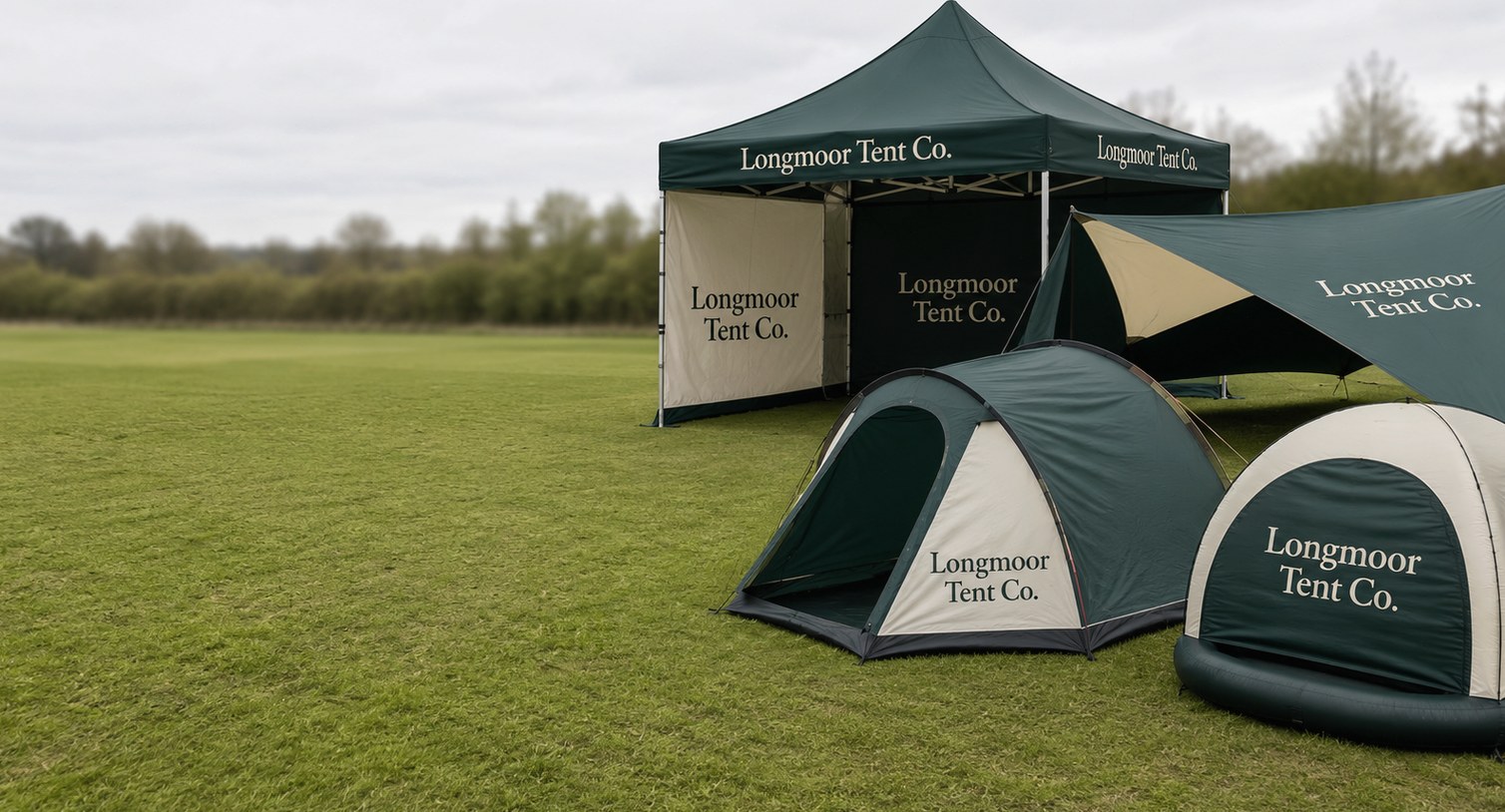
- Structure type (canopy, frame marquee, stretch, inflatable, camping) is the biggest single cost driver
- Full-coverage printing on roof and sidewalls costs more than a logo on the valance alone
- Sidewalls, flooring, weights and carry bags are quoted as separate line items
- Minimum order is 12 tents; free mockup within 24 hours; standard turnaround about 2 weeks
- You pay nothing until you approve the design
What drives the cost of custom tents?
The cost of custom tents is driven mostly by the structure, then by the frame, the print coverage, the accessories, the quantity and the delivery timing. Two quotes for “a branded tent” can look nothing alike because one buyer wants a pop-up canopy with a logo on the valance and another wants a fully printed frame marquee with sidewalls, flooring and ballast.
Get Custom Tents builds each quote line by line, so you can see which choices move the total and decide where to spend. The main inputs are:
- Structure: pop-up canopy, printed frame marquee, stretch tent, inflatable air dome or branded camping tent.
- Size: a larger footprint means more fabric, more frame and more freight.
- Frame material: steel or aluminum, and the gauge of the legs and trusses.
- Print coverage and method: logo only, full roof, or every panel printed.
- Accessories: sidewalls, flooring, weights, stakes and carry bags.
- Quantity and timing: how many units share the setup work, and whether you need express shipping.
The sections below walk through each driver so you know what to ask for before you request a quote.
Why does the tent structure change the price so much?
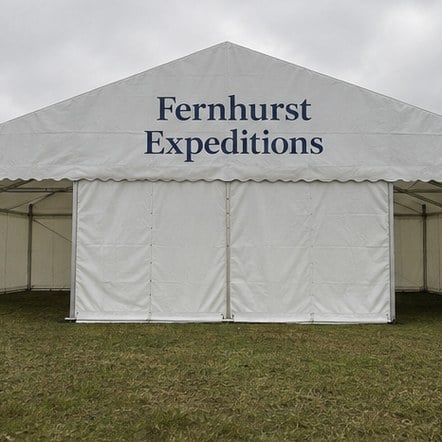
The tent structure changes the price more than any other choice because each style uses a different amount of fabric, a different frame system and a different level of engineering. A pop-up canopy is a compact folding frame with a fitted top, while a frame marquee is a modular hall with roof panels, trusses and anchoring hardware.
| Structure | What you are paying for | Relative cost driver |
|---|---|---|
| Pop-up canopy tent | Folding frame, printed top and valance | Lowest complexity; cost scales with size and frame |
| Printed frame marquee | Modular frame, roof and wall panels, hardware | More fabric and heavier frame per unit |
| Stretch tent | Large single membrane, poles, rigging | Fabric area and tensioning hardware |
| Inflatable air dome | Sealed air beams, printed skin, blower or pump | Airtight construction and inflation kit |
| Branded camping tent | Smaller shelter, printed fly or panels | Low per unit; volume and print area matter most |
If you are torn between two styles, the frame marquee vs. stretch tent comparison explains how each one sets up and where each one earns its cost. Choosing the structure that fits your event, rather than the most impressive one, is the fastest way to keep a custom tent order on budget.
How do frame material and size affect a custom tent quote?
Frame material and size affect a custom tent quote because they set how much metal, how much fabric and how much shipping weight go into every unit. A larger footprint needs a bigger top, longer legs or trusses and more packaging, so the cost rises with every step up in size.
Steel frames are heavier and usually the more economical choice for tents that stay in one place or get set up occasionally. Aluminum frames are lighter to carry and resist corrosion, which matters for teams and brand crews who set up every weekend. Heavier-gauge legs and reinforced joints add cost but also add stiffness in wind.
When you compare quotes, check that the frames match. A supplier quoting a light-duty steel frame against another quoting commercial aluminum is not offering the same tent. Ask each supplier to name the frame material, the leg profile and whether the frame carries a warranty, so the comparison is fair.
Size also changes freight. Larger frame marquees and stretch tents ship as bulky cartons or pallets, and that freight is part of the delivered cost even if it appears as a separate line.
Does printing the whole tent cost more than printing a logo?
Yes, printing the whole tent costs more than printing a logo, because full coverage uses more printed fabric, more ink and more finishing time per panel. A logo on the front valance is the leanest branding option; a full-bleed roof, printed sidewalls and a printed back wall turn the tent into a complete branded space and are priced accordingly.
The decoration method matters too. Dye sublimation suits full-color, edge-to-edge artwork and photographic images. Screen printing suits bold logos in a few spot colors. Vinyl suits simple marks and small runs of names or numbers. The full breakdown is in the guide on how custom canopy tops are printed, linked from the blog.
Common print-coverage tiers, from leanest to fullest:
- Logo on one or more valance sides
- Logo on the roof peaks plus valances
- Full-color printed roof and valances
- Printed roof plus one printed back wall
- Every panel printed, including all sidewalls
Many buyers print the roof fully and add a single printed back wall, which gives a strong backdrop for photos without printing every panel.
How much do sidewalls, flooring and weights add to a custom tent order?
Sidewalls, flooring and weights add to a custom tent order as separate line items, so you only pay for the accessories your venue actually needs. A tent on a grass sideline may need little more than stakes, while a tent on a concrete plaza or a windy waterfront needs weights, and a tent used for hospitality may need walls and a floor.
Get Custom Tents lists accessories individually on the quote. The usual options are:
- Sidewalls: full, half or zippered walls, plain or printed.
- Flooring: interlocking floor or ground cover for hard or muddy surfaces.
- Weights and ballast: leg weights or ballast bags for surfaces where stakes cannot go in.
- Carry bags and cases: wheeled bags that protect the frame and fabric between events.
The sidewalls, flooring and weights page covers each option, and the anchoring and wind ratings page explains how much ballast a tent needs. Leaving anchoring off a quote to save money is a false economy; a tent that cannot be held down safely cannot be used.
Does ordering more custom tents lower the cost per tent?
Ordering more custom tents usually lowers the cost per tent, because artwork setup, color matching and production preparation are shared across more units. The minimum order at Get Custom Tents is 12, and quotes for larger runs typically spread those fixed steps more thinly.
Quantity also interacts with design. Twelve identical tents share one setup, while twelve tents with twelve different designs each need their own artwork file and proof. That is still possible, and leagues and franchise groups do it often, but it is worth knowing that more unique designs mean more preparation work in the quote.
Ways to get the most from your quantity:
- Keep one shared design for the roof and change only the valance text, such as a team or location name.
- Group tents of the same size and frame together on one order.
- Order spare tops or replacement panels at the same time rather than later.
- Plan next season’s tents alongside this season’s if the design is settled.
Clubs and leagues that buy for many teams can see how other groups structure their orders on the custom tents for youth sports leagues page.
How does timing change what you pay for custom tents?
Timing changes what you pay for custom tents mainly through shipping. Standard turnaround is about 2 weeks after you approve the mockup, and that schedule carries the standard delivery cost. When an event date is closer, faster turnaround is available with express shipping, which adds to the delivered cost.
The cheapest way to buy is simply to start early. A buyer who requests a quote well ahead of the event can review the free mockup, ask for revisions, settle accessories and still receive the tents on the standard schedule. A buyer who starts late often pays for express freight and has less room to fine-tune the design.
A practical rule is to count back from the event: allow time for the mockup and approval, about 2 weeks for production and delivery, and a few days of buffer for a test setup before the tent goes public. Unlimited free revisions mean the design step does not have to be rushed if you start early.
How do you get an accurate custom tent quote the first time?
You get an accurate custom tent quote the first time by sending the structure, size, quantity, print coverage, accessories, artwork and event date in one request. Get Custom Tents prices from exactly those inputs, so a complete request comes back as a complete quote instead of a string of follow-up questions.
Use this checklist before you fill in the quote form:
- Structure and size: which tent style and footprint, or the space you need to cover if you are unsure.
- Quantity: how many tents, and whether sizes or designs vary across the order.
- Frame: steel or aluminum, or ask for a recommendation based on how often you set up.
- Print coverage: valance logo, full roof, printed walls or every panel.
- Accessories: sidewalls, flooring, weights and bags.
- Artwork: your logo in the best file you have; vector files are ideal.
- Event date and delivery ZIP: so timing and freight can be quoted correctly.
From there, Get Custom Tents sends a free mockup within 24 hours, revisions are unlimited, and you pay nothing until you approve the design. The how it works page walks through each step from quote to delivery.
Frequently asked questions
Does a larger custom tent always cost more than a smaller one?
A larger custom tent almost always costs more than a smaller version of the same style, because it uses more fabric, a longer frame and more packaging and freight. The exception is when a larger tent replaces two smaller ones; one bigger tent can sometimes cover the same space with less total frame and fewer accessories, so ask for both options on your quote.
Why do stretch tents and frame marquees get quoted so differently?
Stretch tents and frame marquees get quoted differently because they are built in completely different ways. A stretch tent is one large tensioned membrane with poles and rigging, while a frame marquee is a modular metal frame with separate roof and wall panels. The materials, hardware and printing area differ, so Get Custom Tents prices each structure from its own specification.
Is an aluminum tent frame worth the extra cost over steel?
An aluminum tent frame is worth the extra cost when your crew sets up often, carries the tent by hand or works near water, because aluminum is lighter and resists corrosion. Steel suits custom tents that stay in one place or come out a few times a season. Get Custom Tents can quote both frames side by side so you can compare.
Does a full-color design cost more than a one-color logo on custom tents?
A full-color design on custom tents does not always cost more than a one-color logo; the print area matters more than the number of colors. Dye sublimation prints full color at the same effort as one color, while screen printing adds work per color. A small one-color valance logo is still the leanest option because it covers the least fabric.
Can I mix tent sizes in one order and still reach the minimum?
Custom tents in different sizes can usually be combined in one order to reach the minimum of 12, as long as they share the same structure family and artwork approach. Get Custom Tents quotes each size as its own line, so you can see how the mix affects the total and adjust quantities before you approve the mockup.
Are sidewalls and weights included in a custom tent quote by default?
Sidewalls and weights are not bundled into a custom tent quote by default, because every venue needs something different. Get Custom Tents lists walls, flooring, weights and carry bags as separate line items, so you choose exactly what your site needs. Tell us the surface and conditions you expect, and we can recommend an anchoring setup to include.
Does express shipping change the total cost of custom tents?
Express shipping raises the total cost of custom tents because faster freight costs more, especially for bulky frame marquees and stretch tents. Standard turnaround is about 2 weeks after mockup approval, and faster turnaround is available with express shipping. Starting your quote early is the simplest way to stay on standard delivery and avoid the express charge.
Will revising my design after the mockup change the tent quote?
Revising the artwork on custom tents after the mockup does not change the quote when the print coverage and method stay the same, and Get Custom Tents offers unlimited free revisions. The quote changes only if the revision changes the order itself, such as adding printed sidewalls, switching decoration methods or adding more unique designs.
Why might two suppliers quote very different totals for the same tent?
Two suppliers can quote very different totals for custom tents that sound identical because the specifications underneath differ. One may use a lighter frame, thinner fabric, fewer print areas or leave out anchoring and freight. Ask each supplier to list frame material, print coverage, accessories and delivery so you are comparing the same tent on equal terms.
Does the event surface affect what a custom tent order costs?
The event surface affects what a custom tent order costs because it decides the anchoring you need. Custom tents on grass can often be staked, while tents on concrete, tarmac or decking need leg weights or ballast bags. Get Custom Tents adds the right anchoring line to the quote once you describe where and how the tents will be set up.
What details should a custom tent quote request include?
A custom tent quote request should include the tent style, size, quantity, frame preference, print coverage, accessories, artwork and event date with a delivery ZIP. Get Custom Tents prices directly from those details, so a complete request returns an accurate quote and a free mockup within 24 hours without several rounds of follow-up questions.
Do I pay anything before approving the custom tent mockup?
You pay nothing for custom tents until you approve the design. Get Custom Tents sends a free mockup within 24 hours of your request, then revises it as many times as you need. Once you approve the final mockup, the order moves into production with a standard turnaround of about 2 weeks.
Get a free mockup for your tents
Send your logo or idea and the quantity you have in mind. Get Custom Tents returns a free mockup within 24 hours, you approve the design before anything is produced, and standard turnaround is about two weeks with faster options available. Get a custom quote.