Custom tents last for many seasons when you clean printed canopies gently, dry every panel completely before packing, and store frames and fabric apart in a dry place. Get Custom Tents prints branding that is built for outdoor events, and a simple routine after each use keeps colors sharp, frames moving freely and your tents ready for the next booking.
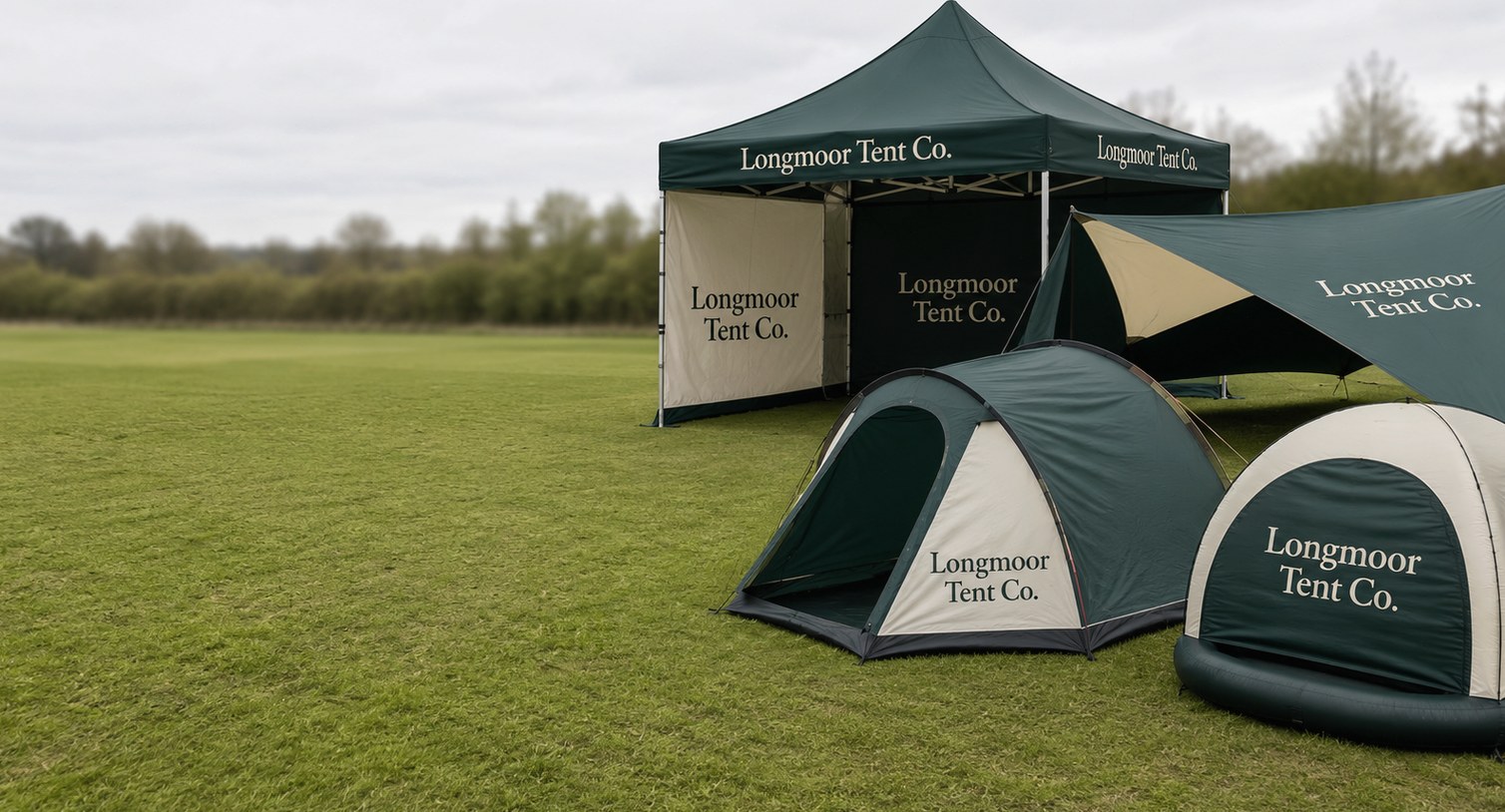
- Dry every canopy and sidewall fully before packing to prevent mildew and odor
- Use mild soap, cool water and a soft brush; skip pressure washers and harsh solvents
- Store canopy tops off the frame, loosely folded, in a dry and shaded room
- Replacement canopy tops can be reprinted for an existing frame, with a free mockup within 24 hours
What is the right way to clean custom tents after an event?
Clean custom tents with cool water, a mild soap and a soft brush or sponge, working on the canopy while it is still on the frame so the fabric stays taut. Rinse thoroughly and let the tent stand open until every panel is dry. That routine removes dust, pollen, food spills and bird droppings without stressing the printed surface.
Most marks on a branded canopy are surface dirt, and they come off more easily when you deal with them the same day. Dried-on grime and sap bond to the fabric over time, and scrubbing hard later is what wears printed areas. A quick rinse at the venue, or as soon as the tents come back to your shop, saves effort later.
- Brush off loose dirt and leaves with a dry, soft brush.
- Wet the canopy with a hose on a gentle setting or a bucket and sponge.
- Wash with diluted mild soap, using light circular strokes on printed areas.
- Rinse until no suds remain, since soap residue attracts new dirt.
- Leave the tent standing open in the shade or a breeze until completely dry.
Which cleaning products and tools should you avoid on printed tent fabric?
Avoid pressure washers, bleach, solvents, abrasive pads and machine washing on custom tents. Each of those can strip the protective finish from the fabric, weaken seams or dull the printed graphics. A soft brush and mild soap handle almost every routine cleaning job on a branded canopy, sidewall or valance.
Pressure washers are the most common mistake. The force that makes them effective on concrete can lift fibers, push water through seams and blur fine logo edges. Household cleaners with bleach or degreasers can fade colors and leave residue that later shows up as streaks in photos. Washing machines twist and crease large panels and can tear the hook-and-loop strips that hold sidewalls in place.
- Skip: pressure washers, bleach, solvents, stiff wire brushes and scouring pads.
- Skip: tumble dryers and ironing printed panels.
- Use: cool water, mild soap, soft brushes and microfiber cloths.
- Test first: try any spot cleaner on a hidden corner before using it on your logo.
Why does drying matter more than washing for custom tents?
Drying matters most because custom tents packed while damp can develop mildew, musty odors and stains within days, and mildew marks on printed fabric are hard to remove. Every canopy, sidewall and storage bag should be completely dry before the tent goes into storage, even if that means opening it again back at your base.
Events often end in the rain or at dusk, when there is no time to dry anything on site. That is fine as long as the tent comes back out the next day. Set the frame up indoors or in a covered area, attach the canopy, and let air move across both sides of the fabric. Check the valance seams and the corners, which hold moisture the longest.
Frames need the same attention. Wipe water off the legs and joints and let the frame dry open before you collapse it. Moisture trapped in sliding joints and around the leg pins is what causes stiffness and corrosion over a season.
How should you store custom tents between events?
Store custom tents in a dry, shaded room with the canopy removed from the frame, folded loosely along its natural lines and packed in a breathable bag. Keep frames upright or flat in their own bag, and never stack heavy weights or boxes on top of folded printed fabric.
Removing the canopy protects both parts. Leaving the top on a collapsed frame puts pressure on the same folds every time and can rub the print where the frame joints press against it. Varying the fold slightly between storage periods also stops permanent creases from forming across your logo.
| Part | Best storage | Avoid |
|---|---|---|
| Printed canopy top | Loosely folded, breathable bag, dry shelf | Plastic bins sealed while damp, heavy loads on top |
| Sidewalls and valances | Rolled or folded with hook-and-loop strips closed | Loose strips catching other fabric |
| Frame | Collapsed, dry, in its own bag | Storing wet, dragging across concrete |
| Weights and stakes | Separate bin or crate | Packing inside the canopy bag |
Label every bag with the tent style and the design on it, which helps when a program runs several event tents with different branding.
How do you keep printed tent graphics bright for longer?
Printed graphics on custom tents stay bright longest when the canopy spends less idle time in strong sun, gets cleaned gently and is stored dry and out of the light. Full-color printed panels are designed for outdoor use, but every printed fabric benefits from the same care habits that protect the base material.
The biggest factor you control is exposure. A tent that stands for an afternoon event and goes back into storage ages far more slowly than one left up outside for weeks at a time. If a tent will be up for a long stretch, take it down between uses when possible rather than leaving it standing empty.
Design choices help too. When you plan a reorder, the mockup stage is a good moment to review how your colors held up. Get Custom Tents can adjust the artwork on the next order through unlimited free revisions, and the full-color printed custom tents page explains how edge-to-edge graphics are applied to every panel.
What should you inspect on custom tents before each event?
Before each event, inspect custom tents for fabric tears, loose seams, worn hook-and-loop strips, bent frame legs, sticky joints and missing pins, stakes or weights. A five-minute check in the shop is far easier than discovering a problem while your team is setting up in front of guests.
Run the check right after cleaning, when the tent is already standing, and again before the tent leaves for a booking. Keep a simple log for each tent so a whole crew can see what was repaired and what needs replacing.
- Canopy: small holes, abrasion near corners, stains on the logo area.
- Sidewalls: zippers, hook-and-loop strips and attachment points.
- Frame: bent legs, cracked joints, smooth sliding, all pins present.
- Anchoring: enough weights or stakes for the surface, as covered in the anchoring and wind ratings guide.
Anything that affects stability should be fixed before the tent goes up. Cosmetic issues can wait for the off-season.
When is it time to replace a canopy top instead of the whole tent?
Replace only the canopy top when the frame is still sound but the printed fabric is faded, stained or carries outdated branding. A healthy frame can take a fresh top many times, and a new canopy is often the fastest way to refresh a tent fleet after a rebrand, a sponsor change or a few hard seasons.
Replace the whole tent when the frame itself is damaged, when joints no longer lock reliably or when the tent no longer fits how you run events. A tent that will not stay square or stable is a safety issue, not just a cosmetic one.
Get Custom Tents returns a free mockup within 24 hours for replacement canopy tops, and standard turnaround is about 2 weeks after you approve, with express shipping available for tight dates. You pay nothing until you approve the design. If you also need new sidewalls, flooring or weights, add them to the same quote request so everything arrives together.
Frequently asked questions
Can I wash custom tents in a washing machine?
Custom tents should not go in a washing machine. Large canopy panels twist and crease in a drum, hook-and-loop strips can tear, and the spin cycle stresses seams and printed areas. Clean the canopy by hand on its frame with cool water, mild soap and a soft brush, then rinse and leave it standing open until every panel is completely dry.
How do I remove tree sap from a printed tent canopy?
Tree sap on custom tents comes off most safely when you treat it early. Soften the spot with warm soapy water, let it sit briefly, then lift it gently with a soft cloth. Avoid solvents and scraping tools, which can damage the printed surface. Test any specialty cleaner on a hidden corner first, and rinse the area well before drying.
What should I do if a tent was packed away wet after an event?
Custom tents packed away wet should be unpacked and set up within a day or two. Attach the canopy to the frame indoors or under cover, let air reach both sides, and check corners and valance seams for damp spots. Get Custom Tents recommends drying fully before repacking, since moisture held in a bag is what leads to mildew and odors.
Is it better to fold or roll a tent canopy for storage?
Custom tents store well either folded loosely or rolled, as long as the fabric is completely dry. Folding along the natural lines is quicker and fits standard bags, while rolling sidewalls reduces sharp creases. Change the fold lines slightly between storage periods so creases do not set across your logo, and never pile heavy items on the folded canopy.
Can mildew stains be removed from printed tent fabric?
Mildew on custom tents can often be lightened with mild soap, a soft brush and thorough drying in fresh air, but stains on printed fabric do not always disappear completely. Prevention works far better than removal. If a branded canopy is badly marked, Get Custom Tents can reprint a replacement top for the existing frame with a free mockup within 24 hours.
How do I keep tent frame joints from sticking?
Tent frame joints on custom tents stay smooth when they are dried after every wet event and kept free of sand and grit. Wipe the legs and sliding joints, let the frame dry open, and brush out debris before collapsing it. Check pins and locking points before each event, and set aside any leg that binds so it can be repaired.
Where is the best place to store custom tents over the winter?
Custom tents are best stored over the winter in a dry, shaded room with steady conditions, such as a storeroom or an insulated garage. Avoid damp basements, unheated sheds with leaks and spots near heaters. Keep canopies off the frames in breathable bags on shelves, frames in their own bags, and weights stored separately so nothing presses on printed fabric.
Should I clean a tent before storing it for the off-season?
Custom tents should always be cleaned and fully dried before off-season storage. Dirt, food residue and bird droppings left on the fabric for months can set into stains that are much harder to remove later. A gentle wash, a thorough rinse and a full day of drying in open air leaves the canopy ready to use when the next season starts.
How can event staff avoid damaging tents during teardown?
Custom tents are damaged most often during rushed teardown. Ask staff to remove sidewalls and weights first, lower the frame evenly from both sides, and avoid dragging the canopy or frame across concrete or gravel. Get Custom Tents suggests a short written teardown routine kept in each tent bag, so new volunteers and rotating crews follow the same steps every time.
Can small tears in a tent canopy be repaired?
Small tears in custom tents can often be patched with a fabric repair kit suited to outdoor material, applied to a clean, dry surface. Repair holes early, before wind stretches them further. If a tear runs across the logo or sits at a stressed corner, a replacement canopy top usually looks better and keeps the frame in service for many more events.
Do tent bags need to be cleaned as well as the tents?
Custom tents stay cleaner when their storage bags are cleaned too. Sand, grass and moisture collect in bags and transfer back onto fabric during the next packing. Shake bags out after every event, wipe them down when they are muddy, and let them dry fully before repacking. Replace any bag with a broken zipper so dirt and water stay out.
How often should a branded tent fleet be inspected?
A fleet of custom tents should get a quick check after every event and a fuller inspection at least once before each season. Keep a simple log for each tent covering canopy condition, sidewalls, frame joints and anchoring gear. Get Custom Tents customers with several event tents find that labeling each bag makes tracking repairs and replacements much easier.
Get a free mockup for your tents
Send your logo or idea and the quantity you have in mind. Get Custom Tents returns a free mockup within 24 hours, you approve the design before anything is produced, and standard turnaround is about two weeks with faster options available. Get a custom quote.