Two custom canopies can look identical on a product page and behave completely differently in their second season outdoors. The difference is rarely the frame; it is how the graphic was put onto the top and what fabric sits under the ink. There are three printing methods most buyers actually choose between for a canopy top, and each one is the right answer for a different combination of artwork, quantity and how hard the tent will be used. Here is how they compare, and the fabric specifications that decide how long any of them lasts.
Dye sublimation: the default for full-color tops
Dye sublimation is the method behind most vividly branded pop-up canopies. Heat turns solid dyes into a gas that penetrates the polyester fibers, so the color becomes part of the fabric rather than a layer sitting on the surface. That has two practical consequences. First, there is effectively no limit on colors, gradients or photographic detail, which makes it the natural choice for complex logos, background images or a design that bleeds across the whole canopy. Second, because the color is in the fiber, it does not crack, peel or flake the way a surface coating can, and it keeps the fabric breathable. The trade-off is that sublimation only works on polyester, so it is tied to a poly top rather than a heavier vinyl one, and like any printed textile it will gradually soften in tone under relentless direct sun. For the majority of event and retail canopies that need full color at a sensible price, this is the method to beat.
Screen printing: a few solid colors, built to last
Screen printing pushes opaque ink through a stencil onto the surface of the fabric, one screen per color. It shines when your artwork is one to three solid brand colors, a bold logo or wordmark rather than a photograph. The colors come out dense and durable, and at higher quantities the cost per tent drops because the expensive part, making the screens, is a one-time setup you spread across the run. The limitations are the flip side of that: each additional color adds a screen and cost, gradients and fine photographic detail are not its strength, and small orders carry the full setup cost on just a few units. If your brand lives in two flat Pantone colors and you are buying a batch of tents for a dealer network or a chain of locations, screen printing often gives the most durable mark for the money.
Heat transfer and vinyl: logos in small quantities
Heat-transfer and cut-vinyl methods press a pre-printed or plotter-cut graphic onto a stock-color top. This is the practical route when you need one tent or a small handful, or when you simply want to add a logo to an off-the-shelf canopy without commissioning a fully printed top. Setup is minimal and turnaround is quick. The catch is durability: the graphic sits on the surface, so with heavy handling and strong sun the edges can eventually lift or crack, and large solid areas of vinyl add weight and reduce breathability. For a simple logo, a single event, or a fast reorder, it is efficient; for a full-canopy design that will be set up hundreds of times, it is usually the wrong tool. Some suppliers also offer direct digital or UV printing on a coated PVC top, which handles photographic art with strong outdoor durability and is worth asking about when the design is complex and the tent will live outside for years.
The top is only as good as the fabric under the ink
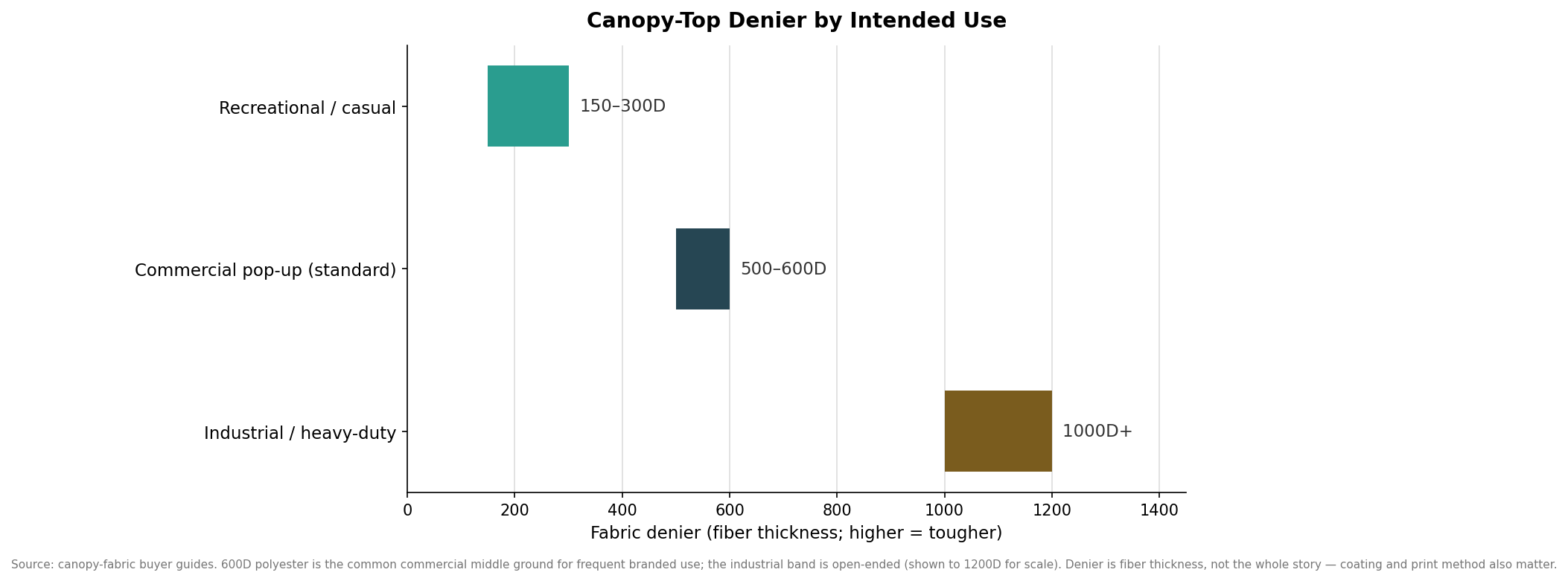
Whichever method you pick, the print inherits the lifespan of the fabric. The first number to check is denier, which measures how thick each fiber is. Light recreational tops run 150 to 300 denier, the commercial standard for frequent branded use sits around 500 to 600 denier, and industrial fabrics climb past 1000 denier at the cost of weight and portability. For a tent that gets set up most weekends, 600D polyester is the widely used middle ground because it balances toughness, pack size and print quality.
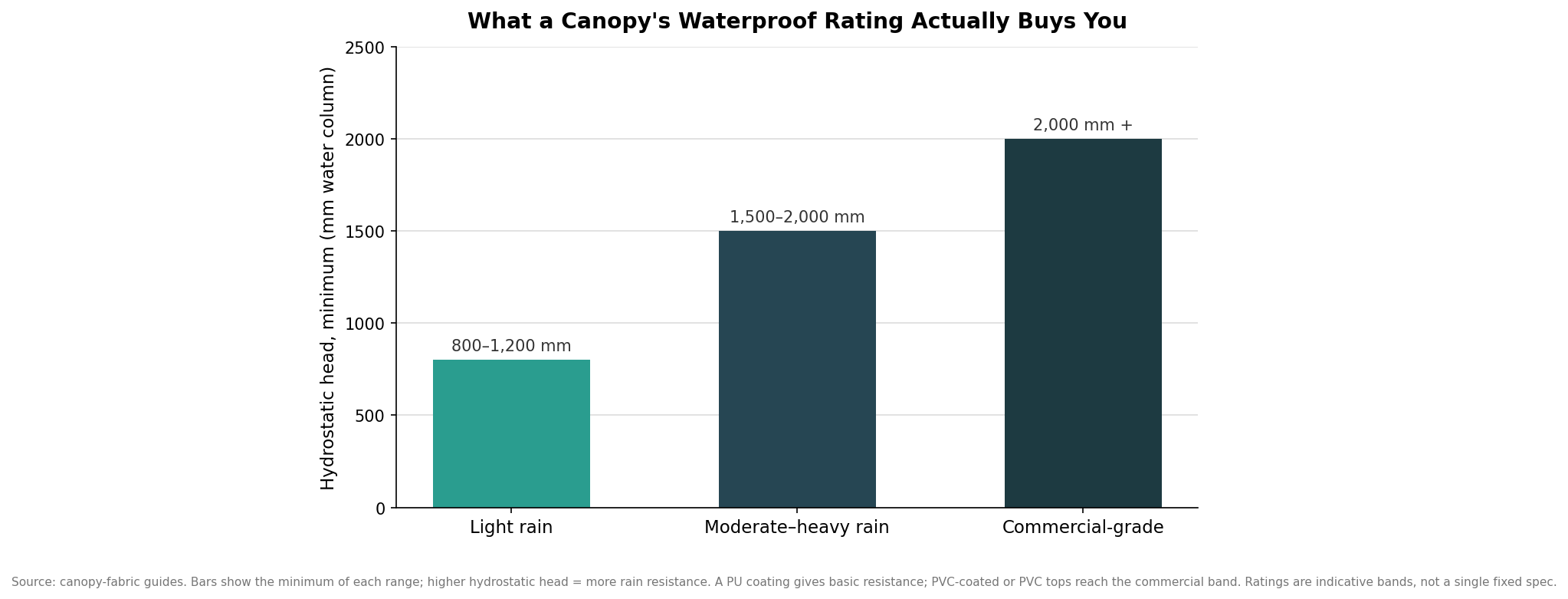
Water resistance is a separate spec, usually delivered by a coating and measured as hydrostatic head in millimeters. A polyurethane coating gives basic resistance in the 800 to 1,200 mm range that shrugs off light rain, moderate to heavy protection lands around 1,500 to 2,000 mm, and commercial-grade waterproofing sits above 2,000 mm, typically from a PVC coating or a PVC top. Match the rating to the weather you actually work in rather than paying for marine-grade waterproofing to stand in a summer parking lot. Two more specs round it out: sun protection, where a UPF 30 or 50 rated fabric holds color and shades better under direct exposure, and flame certification. Canopy fabrics are commonly certified to the CPAI-84 flammability standard, with larger tents sometimes required to meet NFPA 701, but whether you must have it depends on your venue or local fire code, so confirm the requirement and keep the certificate with the tent.
Matching the method to the job
The decision comes together quickly once the artwork and quantity are on the table. Full-color or photographic designs for regular use point to dye sublimation on a 600D polyester top. One to three solid colors in a larger order point to screen printing for the most durable mark for the money. A single tent, a small run, or a logo added to a stock canopy points to heat transfer or vinyl. And a complex design that has to survive years of weather points toward digital or UV printing on a coated PVC top. Before you approve anything, write the full specification down: the print method chosen for your art and colors, the denier, the waterproof rating for your climate, the UV expectation, and the flame certificate if your venue requires one, plus any walls, half-walls or weight bags as separate line items.
The figures here reflect common industry ranges rather than a single manufacturer’s exact numbers, and warranties and real-world lifespan vary with fabric lot, coating and how the tent is stored between uses. Treat the denier and waterproof bands as a starting point for asking a supplier the right questions, get the specific fabric weight, coating and certification confirmed on your order, and, where your art is brand-critical, request a printed sample before committing to a full run.